


The United States Surtax Order (2026) does not tax an American exporter. It taxes the Canadian importer of record at the border, at 15%, 25% or 50% of the value for duty depending on which of its three schedules a product sits in, from 12:01 a.m. on 8 September 2026. That distinction is the entire story for this province. The firm that writes the cheque is the Alberta company buying the part, not the American company selling it, and the cheque is made out to the Government of Canada.
Key facts
- The United States Surtax Order (2026) took effect at 12:01 a.m. on 8 September 2026 and applies surtaxes of 15%, 25% or 50% of the value for duty according to schedule, per Canada Border Services Agency Customs Notice 26-23.
- The Department of Finance Canada published the covered product list on 25 August 2026, covering $27.6 billion of goods imported from the United States.
- Goods that were in transit to Canada before 8 September 2026 are exempt from the surtax, per Canada Border Services Agency Customs Notice 26-23.
- The Government of Alberta launched an online portal on 4 September 2026 for businesses to report effects of tariffs and counter-tariffs on costs, investment decisions, market access, competitiveness, employment and supply chains.
- The Canadian Federation of Independent Business reported on 3 September 2026 that 49% of small importers sourcing from the United States are affected by Canadian counter-tariffs, and 46% of small exporters selling to the United States are affected by American tariffs, from a survey of 1,545 members conducted 28 to 31 August 2026.
Alberta’s exposure sits on the buying side, not the selling side
Canadian energy products are carved out of the American measure. That carve-out is why Alberta’s direct export exposure to the United States tariff regime is unusually small for a province that shipped more than $151 billion of goods south last year, and it is also why almost every account of the trade file written from central Canada gets Alberta’s position backwards. The province is not principally a victim of what Washington did. It is principally a payer of what Ottawa did in response.
The manufacturing base here is smaller than Ontario’s, and the firms that carry the weight are the thousands of small and medium operations that buy American steel, appliances, electronics, agricultural machinery parts and forklifts because there is no domestic supplier at the volume and price they need. A surtax on those inputs is not a trade weapon aimed at a foreign government. It is a cost increase applied to a shop in Nisku, collected at the border, by the same government that will later ask that shop how business is going.
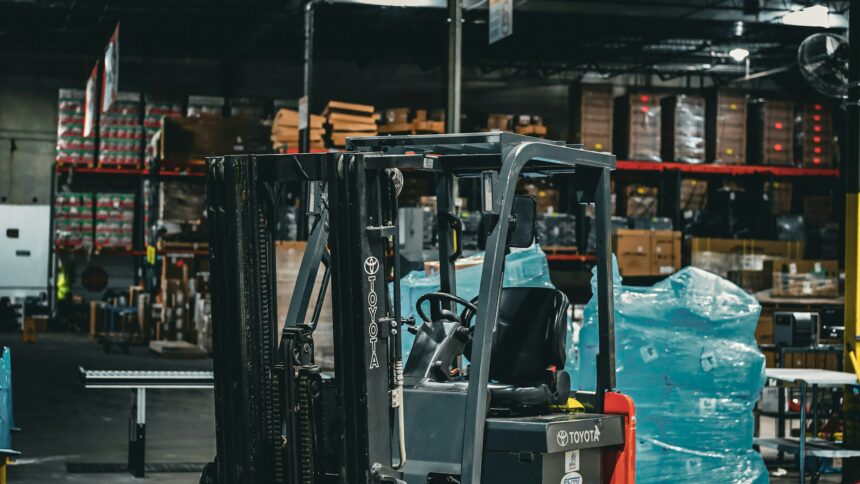
The scale of the difference is visible in the product tiers themselves. Electronics were placed in the 50% schedule. Appliances sit at 25%. Agricultural machinery parts and forklifts sit at 15%. Those three lines describe, almost exactly, the purchase order of a mid-sized Alberta industrial firm, and the firm has no standing anywhere in the process that set them.
The gap between what the measure is called and what it does
The federal release frames the list as a response to American action, which is a description of purpose. The Customs Notice describes a surtax payable by the importer, which is a description of effect. Those are not the same sentence, and the second one is the operative one, because it is the one the Canada Border Services Agency administers. A response is something you do to another country. A surtax is something a Canadian business pays.
Reported figures attributed to the Government of Alberta put the exposed share at roughly $4.9 billion, or about 11% of what Alberta buys from the United States. A separate estimate from a provincial bank’s economics desk puts directly imported goods closer to $1.5 billion, with the true figure possibly near double that once goods arriving through other provinces are counted. Those two numbers measure different things and were produced by different methods, and neither has been published in a federal or provincial document that sets out its own workings. Both should be treated as estimates rather than as findings.
The lived versions are easier to verify than the aggregates. A Calgary producer, Saturn Oil and Gas, has put the added cost of the counter-tariffs on its well expenses at somewhere between $5 million and $15 million a year, which for a company of that size is material without being existential. An Edmonton lift manufacturer, RAM Elevators and Lifts, describes the effect as an accumulation of small wounds rather than a single blow. Both are honest accounts of the same instrument landing on balance sheets of different sizes. The larger firm absorbs it. The fourteen-person shop reprices, delays a hire, or takes it out of margin, which is the same thing as taking it out of the owner’s income.
The measurement started after the list was final
Alberta opened its reporting portal on 4 September 2026, four days before the surtax took effect and ten days after the product list was published. The portal is useful and the province is right to have built it. It is also, by construction, an instrument for recording damage rather than for preventing it, because the schedules were already set when it opened. There is no published federal document showing a provincial impact assessment completed before the list was finalized, and none of the firms now filling in the portal were consulted on which schedule their inputs would land in.
Businesses that import from the United States should file with the provincial portal, keep their customs notices, and check whether goods in transit before 8 September qualify for the transit exemption, because that exemption is in the notice and is not automatic. The American scope was adjusted again on 15 September, and certain covered products move from a duty to an outright import ban on 29 September. The cost of both measures lands on Alberta purchase orders in the same quarter, and no order in council changes who pays it at the border.