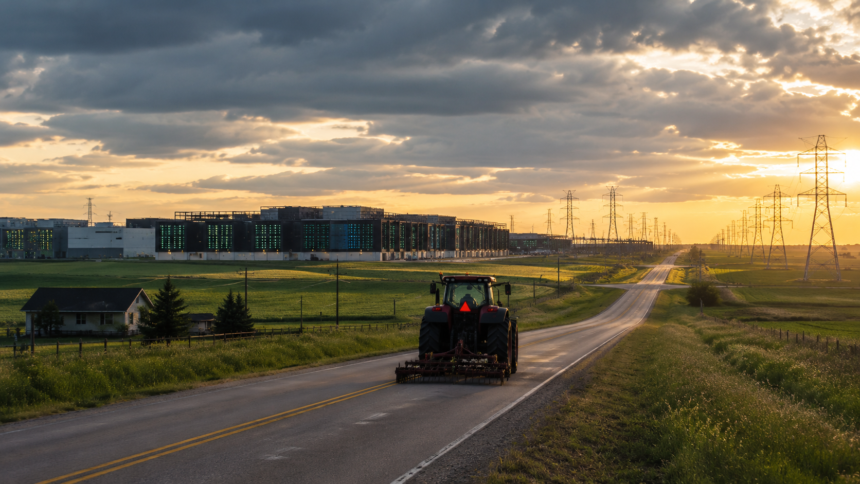
Put the worry and the opportunity in the same sentence and you get the real Alberta question on artificial intelligence. The data centre wave has been called a second coming of oil for rural Alberta, and some of the people closest to it are asking, at what cost. Both things are true at once. The investment is enormous and the stakes for small towns are real. The job is to hold both and win the race in a way the province can be proud of in twenty years.
The money is already moving. Multibillion-dollar data centre proposals are aimed at communities like Olds, places that sit on Alberta’s high-voltage backbone and have the energy workforce to match. The grid operator has set an interim approach to large-load connections, and the Alberta Utilities Commission oversees the approvals. Nobody dragged these towns into the future. They want in. The question is the terms.
There is an Alberta way to do this
The pieces of a good model are already lying around. Make companies bring their own power so the grid stays reliable and the bills stay flat. Hold the line on cost causation so the developer, not the pensioner down the road, pays for the upgrades. Demand water-smart cooling in dry basins. Steer projects onto industrial land instead of prime soil. Let the local council keep the final say. None of that is anti-investment. Put together, it is a competitive advantage, because the serious operators want certainty and a community that is actually on side.
Consultation is the deal
The communities that come out ahead will be the ones that treated consultation as the main event rather than a box to tick. That means real community benefit agreements, written commitments on local hiring and trades work, and an honest accounting of what the project actually delivers in jobs and tax base. A project the community helped shape is one that lasts.
Lead, and set the standard
Alberta is going to be a leader in this industry. That part is not in doubt, and it should not be. AI is not going anywhere, and the power and the will are both here. The only real choice is what kind of leader the province becomes. It can be the place that waved projects through and spent the next decade in court and at angry town halls, or the place that proved you can build the future and keep faith with the people who live where it gets built. The second version is harder. It is also the only one worth having, and it starts by giving every host town a genuine voice in the decision.
A town that says yes with confidence makes a better host than one that says yes under pressure.