




In 1949, Quebec held nearly 30% of the country’s population. Today it holds about 21%, and the share is still falling. Alberta’s share has nearly doubled over the same stretch. Federal strategy has not moved with those numbers. For decades it has rested on the belief that keeping the peace meant meeting every demand coming out of Quebec, and that the West could be left to grow without much attention.
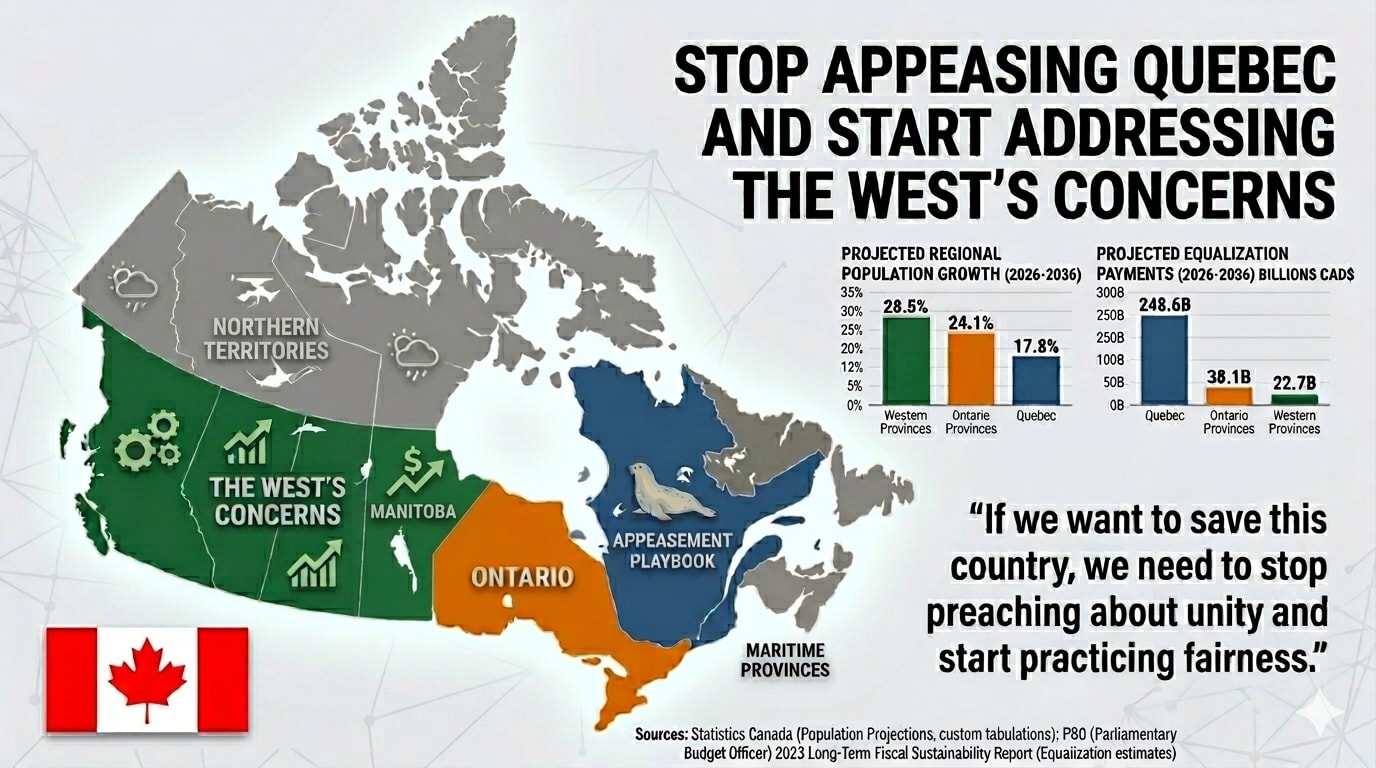
The projection widens the distance. By 2050, Alberta alone could rival Quebec in size, and the four western provinces combined will likely have double their total population. The Charlottetown Accord belongs to the older arithmetic, a pander-first approach built on an assumption about what Quebec wants and how much sway it holds over the rest of the country. That assumption is fading.
Quebec has changed too, and the point deserves granting. A modern, fast-growing Quebec is focused on the same things as the rest of the country, which are jobs, costs and competent government, and the political math that once forced everyone to cater to a narrow set of demands no longer adds up.
Frustration is building in Western Canada all the same. The region is tired of being treated like an ATM for “pet projects” elsewhere while its concerns about internal trade barriers and underfunded infrastructure get pushed to the sidelines. The West has been laying the foundations of the national economy for years, and the federal government should stop treating it as a political afterthought.
Canada needs to practise fairness rather than preach unity for its own sake. That means calling out the special carve-outs and addressing the legitimate grievances of the provinces driving the country’s future growth. The case carries no animus toward Quebec. Fix the infrastructure, drop the red tape, and treat every province as an equal partner. A federation owes its provinces a map of where the country is going, not where it stood eighty years ago.