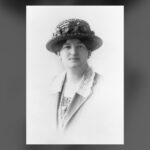



Dr. M. Elizabeth Cannon began Global Positioning System research in 1984, when the technology was still finding its footing. In 2022 she was inducted into the Southern Alberta Business Hall of Fame, which sets an engineer beside the region’s more familiar business names.
From the Geomatics Lab to the President’s Office
Cannon’s career started in the lab. She became an expert in geomatics engineering, the discipline that measures and maps the physical world with precision. According to her Junior Achievement Southern Alberta laureate profile, her GPS research has run through both industry and academia since 1984. It carried her into leadership at the University of Calgary, first as dean of the Schulich School of Engineering and then as president and vice-chancellor from 2010 to 2018. She is now president and professor emerita.
Technology That Reached the World
Her GPS technology has been commercialized for more than 200 agencies worldwide, according to the same profile. The honours include the Johannes Kepler Award from the U.S. Institute of Navigation, an NSERC Steacie Award and the Gold Medal Award from Engineers Canada. She is a Fellow of the Royal Society of Canada and the Canadian Academy of Engineering, and an elected foreign associate of both the U.S. National Academy of Engineering and the Mexican Academy of Engineering.
Recognition came early. In 1998 she was named one of Canada’s Top 40 Under 40, and in 2006 the Women’s Executive Network placed her among Canada’s Top 100 Most Powerful Women. Five universities, including the University of Toronto, SAIT and the Université de Montréal, have given her honorary degrees. She became an Officer of the Order of Canada in June 2019 and received the Lifetime Achievement Award from the Axis Connects Calgary Influential Business Awards in 2021.
Still Investing in the Next Generation
Cannon currently serves on the boards of Mancal Corporation, Canadian Natural Resources Limited and the Rideau Hall Foundation. She is also a Fellow of Creative Destruction Lab Rockies and sits on its Strategic Advisory Board. Junior Achievement of Southern Alberta, the organization behind the Hall of Fame, introduces young people to business and entrepreneurship.
The 2022 induction recognizes a career that began at a research bench and now reaches the boardroom of Canadian Natural Resources Limited.