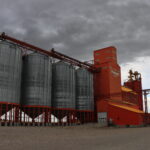
Rural Alberta has a habit of producing the raw material and watching someone else collect the margin. Grain leaves by rail, bitumen leaves by pipe, and what the work teaches stays mostly in the heads of the people running the equipment. The Olds College Smart Farm shows what the other arrangement looks like. The college has run it since the summer of 2018 as a working operation of about 2,800 acres, and its 2021 impact report counted 63 active research projects and more than 100 partners.
That is the model worth copying. A company with a prototype can test it on real cattle and real crops a short drive from the people who will buy it, and the farm says quickly where the prototype is wrong. The tool gets built around a problem somebody here actually has.
Key facts
- Statistics Canada reported that 9.9% of rural businesses and 21.0% of urban businesses used artificial intelligence in the 12 months before its second quarter 2026 survey, in an analysis released June 11, 2026 (Statistics Canada, Canadian Survey on Business Conditions).
- The same Statistics Canada series put rural business AI use at 3.3% in the second quarter of 2024 and 5.7% in the second quarter of 2025.
- Olds College of Agriculture and Technology launched its Smart Farm in the summer of 2018 and reported 63 active research projects and more than 100 partners for 2020-21.
- The Government of Alberta’s Alberta Broadband Fund is a $100 million commitment aimed at households below the federal targets of 50 megabits per second download and 10 upload.
Rural firms are adopting faster than the headline gap suggests
Statistics Canada put AI use at 9.9% of rural businesses in the second quarter of 2026, against 21.0% of urban ones. Two years earlier the rural figure was 3.3%. Rural use tripled in that stretch, and urban use rose about 3.1 times, from 6.7% to 21.0%. By Tribune arithmetic from the same table, the gap in percentage points grew from 3.4 to 11.1 even as both numbers climbed.
The Tribune has already looked at what that survey does and does not count. The more useful point here is who built the technology once a farm, a shop or a service rig is running it, and where the benefit lands.
A subscription rents the tool and keeps what the tool learns
Most of what a rural business adopts arrives as a subscription. The software comes from a vendor in another province or another country, trained on data from places that look little like a stubble field in February. Yield maps, feedlot weight records and the pump logs from a service company are exactly the raw material a better model needs. Whoever writes the licence decides whether that material stays with the operator or flows back to the vendor. A licence is a transfer of wealth with a signature line.
The province has met this choice before. The Leduc lesson of 1947 is that the decade after a discovery settles who owns the industry built on it. The Tribune also noted that Alberta charges for the equipment and nothing for the data, which is the same gap seen from the policy side. Technology built on farm and oilfield data is a newer version of the same decision, and it is being made contract by contract by people who rarely think of themselves as making it.
Connectivity is the entry fee, and part of the bill is paid
None of this works without a connection that carries data in both directions. The Alberta Broadband Fund carries a $100 million provincial commitment aimed at households under the federal target of 50 megabits per second down and 10 up. The upload side of that target matters more to a farm sending sensor data out of a field than it does to a household streaming in.
A connection is a road. It decides who can reach the market and says nothing about what travels on it.
Training and local buyers decide who ends up building
Anyone sceptical of building locally has a fair point and it deserves its full weight. Software copies cheaply, the best tools from large vendors are often very good, and a small rural community with one tower and a handful of programmers cannot out-engineer a company with thousands of developers. Nobody should build a worse product out of pride. Where a vendor already solves the problem, buying is the sensible thing to do, and a rural operator who buys it has made a sound business decision. The argument is narrower than the objection assumes. It concerns the problems no vendor has priced yet, such as the layout of one calving barn or the tangle of well sites a lease operator drives on a given Tuesday.
Those problems belong to the people who live with them.
Technical training turns that ownership into capacity. Olds shows that a rural campus can host a research farm and draw more than 100 partners to it. Local procurement is the next step. A rural municipality, a co-op or a service company that agrees to be the first customer of a locally built tool gives a young firm the one thing venture money cannot supply, a real reference site with real conditions.
A rural community that wants its young people to stay owes them something worth building at home.