

Alberta’s film business did not arrive from California with the trucks. It was put together here, a horse and a wagon at a time, on ground near Longview that the same family has held since 1904. In 1969 word went around the rodeo circuit that a picture shooting outside Calgary wanted men who could ride, and the extras were paid $25 a day. The rider who took that job was John Scott. More than 150 productions have since been shot on his ranch.
The stock was here first.
A production lands in Alberta with a script and a bank account. It does not land with saddle horses that will stand in a gunfight and not move, period wagons built to survive a gallop, a standing town with the right rooflines, or the handful of people on this continent who can put a rider off a running horse and have him get up. Either those things are on the ground already or the picture shoots somewhere else.
Key facts
- The Alberta Order of Excellence citation for John Scott, published by the Government of Alberta, states that extras on the 1969 production of Little Big Man were paid $25 a day, and that Scott was moved to the stunt team at $100 a day within days.
- The Alberta Order of Excellence citation published by the Government of Alberta in 2025 records John Scott as head wrangler on Unforgiven in 1992 and on Legends of the Fall in 1993, and as a stunt performer on Legends of the Fall.
- The Alberta Order of Excellence citation published by the Government of Alberta in 2025 credits John Scott with 67 official film and television credits as a stunt performer and 51 as an animal wrangler, and states that more than 150 productions have been shot on the John Scott Ranch.
- John Scott Productions states on its company website that its Longview, Alberta facility holds more than 465 square metres of period props, a figure Alberta Tribune converted from the company’s stated 5,000 square feet.
- The Government of Alberta Film and Television Tax Credit program guidelines state that the $10 million per project cap was removed on 26 March 2021 and that the credit is paid at a rate of 22% or 30%.
What John Scott Productions actually supplies a film crew
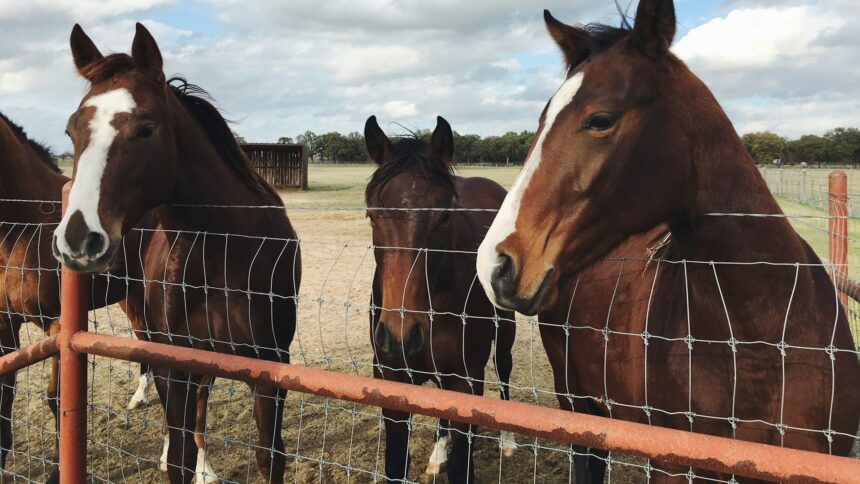
The place near Longview is a working ranch with a backlot bolted onto it. Cattle, horses and a small herd of bison graze the ground his grandfather and his grandfather’s two brothers homesteaded in 1904, a year before Alberta was a province, after leaving the Orkney Islands. The company rents standing sets called the Old Town, the Fort, the Mansion and the Rodeo Grounds. It rents wagons, carriages, tack, a shed’s worth of period props. It rents the animals. More to the point, it rents the people who can handle them.
The scale of that is easy to miss. For a Japanese production in 1990 called Heaven and Earth, Scott wrangled roughly 800 head of horses for a single sequence. Eight hundred. Moving that many animals into position, holding them there, then getting them home sound is not a skill that ships in a road case from Burbank. It exists because a district has been raising and moving horses for a century, and because somebody kept the knowledge in one place.
He built institutions too. In 1974 he was one of four founders of Stunts Canada, set up to sell Canadian stunt performers to American producers. When the province created its first film commission in 1980, he sat in on producer meetings and worked the trade show booths. A rancher did the selling.
The credits are the receipt. Sixty-seven official film and television credits as a stunt performer. Fifty-one as an animal wrangler. Head wrangler on Unforgiven in 1992 and on Legends of the Fall the year after, and he and an Alberta producer spent four years talking that second director into shooting here at all. The Revenant worked the same ground. In 2023 the ranch shared Location of the Year at the Global Production Awards with two other Alberta operations.
Why the tax credit follows the horses rather than the other way around
Alberta pays a Film and Television Tax Credit at a rate of 22% or 30%, and on 26 March 2021 the province removed the $10 million ceiling on what one project could claim. That is real money and it has worked. It is also the most copyable asset Alberta owns. Any jurisdiction with a legislature can write a percentage into a statute by Christmas and undercut us by spring.
What cannot be copied by spring is a man past eighty who knows which horse will stand inside a screaming crowd and which one will bolt. He supplies dozens of them to the Calgary Stampede parade every year, trained to ignore noise that would scatter an ordinary string. Nor the shed of buggies, wagons and tack he assembled over decades, after going through libraries and museums to get the details right. “It’s very important to me that it all looks accurate,” he says. That is a preservation argument made by a private citizen at his own expense, and it has done more for the accuracy of the Canadian West on screen than any grant ever written.
Here is where the condescension shows itself. There is a habit in this country of treating the skilled trades of rural Alberta as scenery for somebody else’s work, as though the crew flies in carrying the competence and the ranch merely sits there being photographed. On this ground the reverse holds. The production brings the money and the schedule. The place brings the people who know what they are doing, and it brought them first.
Look at what is happening on that ranch now. A man in his eighties is running three projects at once, including the third seasons of two streaming series, on a homestead his family took up before there was an Alberta to take it up in. He started at $25 a day and was earning $100 a day inside a week, which tells you the talent was never scarce here. Nobody in Los Angeles knew it existed. Fifty-odd years on, the province has a film sector, a tax credit and a location that wins international prizes, and most of the physical stock holding it up sits in one stretch of country west of High River, owned by a family that never left. The Order of Excellence came in 2025. It could have come a good deal sooner.
None of it came up from California in a truck.