

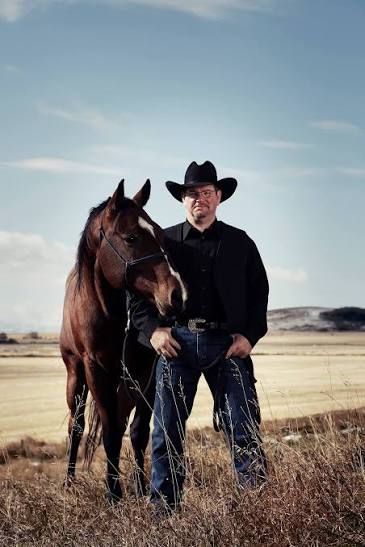
Scott Hardy does everything by hand. At his bench in Longview, Alberta, he drives a graver through sterling silver one deliberate cut at a time, and some pieces take him up to 600 hours.
Key facts
- Scott Hardy makes his silver and gold work entirely by hand at his bench in Longview, and some pieces take up to 600 hours.
- Hardy went full time as a silversmith in 1981 and is largely self-taught as an engraver.
- He was a founding member of the Traditional Cowboy Arts Association in 1998 and won the Will Rogers Award for Engraver of the Year in 2001.
- In 2012 he designed one hundred sterling and gold buckles for the Calgary Stampede centennial, and one design went onto a Canada Post stamp.
There is a sentence he comes back to, and it explains most of what follows. Embellishing horse and rider with precious metal, he says, is a tradition as old as man on horseback, and it deserves the respect of being done by hand, one piece at a time.
Five Generations Before the First Cut
Hardy grew up in Dundurn, Saskatchewan, the fifth generation of a family that made its living off livestock. He came to Alberta in the early 1970s and spent the better part of a decade in the mountains as a packer and guide, then filled the years after with the kind of work that finds a young man in this part of the country. Shoeing horses. Welding. Time on the rigs.
What sent him to a beginner’s silver working course at Mount Royal College in Calgary was not a calling. It was arithmetic. He wanted a way to make money so he could buy land and become a rancher, which is about as Alberta a reason to learn a trade as exists.
Then he picked up the metal. In his own telling, the moment he felt the way silver moves and understood what could be done with it, the thing stole his heart. He went full time in 1981 and has been at the bench ever since. He still runs cattle on a quarter section near Longview. The ranch he was saving for turned out to be the smaller half of the story.
A Self-Taught Hand at the Graver
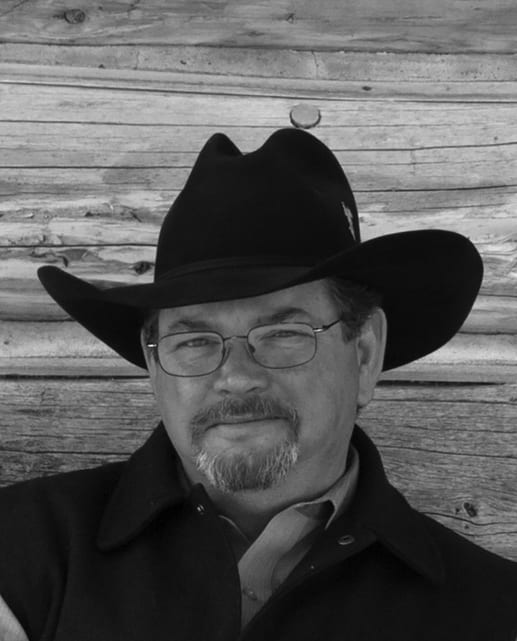
Hardy is largely self-taught, a description that undersells how deliberate the education was. He learned engraving through years of daily practice. There is no shortcut in a discipline where the hand either knows what it is doing or it does not, and where a slip ruins a week.
He had help, and he names it. Al Pecetti, the Nevada silversmith. Mark Drain. Al Tietjen, the bit and spur maker. Chuck Stormes, the saddlemaker. The advice that stuck came from two of them and amounted to the same instruction: these trades deserve respect, so pick one and learn everything about it.
The turn came from an unlikely direction. His grandmother gave him a book about Tiffany and Co, and something in those pages reset what he thought this work could be. His pieces got finer after that, and more detailed, and started reaching for a standard that had nothing to do with what the market expected from a cowboy silversmith.
What the Work Looks Like Now
He works in sterling and in 14 karat gold, yellow and green and red, melting his own ingots and forming sheet over dies he made himself. Filigree. Bright cut. Layered scrollwork wound through floral motifs. Turquoise set in hand-raised bezels. Bucking horses, longhorns, feathers, riders. Buckles, but also flasks, hollowware, saddle horns and stirrups, the working silver that goes on a horse and gets used.
Most of it is commission work, which means most of it disappears into private hands and is never seen again by anyone but the person wearing it. That is the nature of the trade. A buckle, Hardy has said, is a way of carrying a small piece of the West with you no matter where you end up.
Who Has Worn It
The commission list runs long and reads like a cross-section of people who take the West seriously. Garth Brooks. Alan Jackson. Dwight Yoakam. Brooks and Dunn. Andre Agassi and Brooke Shields. Kings Saddlery. The artist Donald Judd. And Ian Tyson, who ranched in this same stretch of foothills and understood as well as anyone what it costs to make something properly.
He keeps galleries of the finished work on his own site, organized by what it is: belt buckles, custom jewelry, hand-raised flasks and saddle silver. Worth a look, though a photograph of hand engraving never quite carries what the metal does when you are holding it.
The Ledger of a Career
The recognition has piled up in a way that is easy to list and hard to appreciate all at once. Best of Show at the Elko gathering in 1994. Founding member of the Traditional Cowboy Arts Association in 1998, an organization he would go on to serve three years as president, and where he became the first member ever elected to office twice. The Will Rogers Award for Engraver of the Year in 2001.
In 2005 he made personal monogram buckles for all thirteen of Canada’s premiers. In 2006 the Smithsonian brought him in to represent Western craftsmanship. His work has hung at the Cheongju International Craft Biennale in South Korea. Stetson put him in its Craftsman Alliance.
Then 2012, and the hundred sterling and gold buckles he designed for the Calgary Stampede centennial. One of those designs went onto a Canada Post stamp, which put a Longview silversmith’s work on Canadian postage. A man who learned to engrave so he could afford a ranch ended up in the mail.
Hear It From Him
The National Cowboy and Western Heritage Museum in Oklahoma City sent a crew north to Alberta for its Explore the West series and let Hardy explain the thing himself, alongside the saddlemaking, bit and spur work and rawhide braiding that sit beside silversmithing in the same tradition.
Why This Matters Here
Alberta is comfortable being known for what it pulls out of the ground and less practised at pointing out what it makes with its hands. That is a shame, because the second list is longer than most people assume and Hardy sits near the top of it. He has taught engraving and fabrication workshops across the continent, lectured at the National Cowboy Museum, and spent five years demonstrating at the Stampede’s Ranch Art Project, which is how a trade survives another generation.
He does not treat the tradition as something under glass. The West never stops, he says, it keeps growing and changing, and his aim is to honour the past while celebrating what comes next. That is a working philosophy, not a nostalgic one, and it explains why the pieces coming off his bench look like nothing anyone made a century ago.
Asked what he would tell somebody starting out, his answer runs about as plain as the man himself. Never quit. Never give up. Live your passion, because great work does not come from people who lack it.
Forty-odd years at the bench, and a quarter section of cattle waiting whenever he steps away from it. Somewhere in the foothills southwest of Calgary a craftsman is working a piece of silver by hand, giving it exactly as long as it needs.
Hardy still works to commission out of Longview. New pieces turn up on his Facebook page, and the full body of work sits at scotthardy.com. In Alberta, Bluerock Gallery in Diamond Valley carries his jewelry.
Correction: An earlier version said a three-piece buckle set takes more than 65 hours and that Hardy spent eight years learning to engrave. Neither figure could be sourced and both were removed (October 10, 2026).
Which Alberta craftsman deserves to be as well known as the industries this province is famous for?
Related from Alberta Tribune
- Rancher and Stuntman John Scott Enters Alberta Order of Excellence
- Alberta TV Building a Provincial Stream for Alberta Stories
- How a Dying Prairie Hamlet Became Alberta’s Own Hollywood