


Alberta’s film and television tax credit has had the same shape for years. Scripted work qualified. A cooking competition shot in a Calgary studio did not.
That changed on June 17.
The province announced more than $65 million across its screen support programs and, in the same announcement, opened the Film and Television Tax Credit to unscripted television and game shows. Culture Minister Tanya Fir described it as “a change that will create jobs and diversify Alberta’s economy.” The setting was the Banff World Media Festival, a room holding more than 1,500 people from over 50 countries, with Netflix, Amazon MGM and Sony Pictures in attendance.
The venue was the point.
What actually changed
Three things, and only one of them is money.
The tax credit now covers unscripted television and game shows. That is the substantive change and it is the one worth watching. Unscripted is the volume end of the business. It is cheaper per hour, faster to greenlight, and far more likely to run for years in the same building with the same crew. A drama shoots for four months and leaves. A competition series can shoot for four months every year for a decade, and the second kind of production is what builds a workforce.
The Film and Television Tax Credit and the Alberta Media Fund now sit under a single ministry, Arts, Culture and Status of Women. They were split between departments before. Anyone who has tried to stack provincial support across two ministries understands why that reads smaller than it is.
And the money was set out in three lines. $60 million through the tax credit, $8 million through the Alberta Media Fund, and $5.4 million through the Alberta Made Screen Industries Program.
The numbers underneath it
The province put its own figures on the table the same day, and they are worth reading closely because they are the entire argument.
Since 2020, Alberta counts $1.6 billion in production spending and $933 million contributed to provincial GDP. More than 380 productions. More than 16,000 jobs supported. The province puts the return at $4 for every $1 invested.
Take the return figure for what it is, a government estimate built on a government methodology, and a large number is still standing when you are done. $1.6 billion is real spend in a province that spent a decade being told by outsiders that it had exactly one industry and no future beyond it. Alberta’s growth lead over the rest of the country is not confined to the sectors people expect.
The figure that should actually interest Albertans is a different one, and it drew almost no coverage. More than 60% of Alberta productions film outside Calgary and Edmonton.
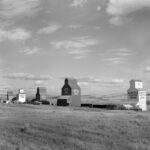
That is what separates this from every other creative economy pitch a government has ever made. In most provinces film money pools inside two or three postal codes. In Alberta it lands in the places that need it, which is why a dying prairie hamlet could turn itself into Alberta’s own Hollywood and mean it. The Alberta Made Production Grant alone put $7.7 million into 117 productions, which the province estimates generated $31 million in spending.
Why the ministry change matters more than it sounds
Administrative consolidation gets skipped in coverage because it is dull to write about. It is not dull to the people filling in the applications.
A producer building a finance plan for an Alberta shoot needs to know, months ahead, which envelopes stack, who decides, and how long the decision takes. When the tax credit and the fund answer to different ministries, that is two timelines, two sets of officials, and two chances for a project to run out of clock. Productions do not wait. They go to British Columbia or Ontario or Georgia, and nobody sends a note explaining that Alberta was considered and passed over.
Putting both under one roof does not add a dollar. It shortens the answer, and in this business the speed of the answer is frequently the whole decision.
What to watch from here
Two things will show whether the unscripted change worked, and neither will be visible for a year.
The first is whether a returning unscripted series actually commits to Alberta. One-off applications prove nothing. A show entering a third season in the same building is the signal that the change did what it was meant to do.
The second is crew depth. Unscripted work does not need the crew a feature needs, but it needs enough of it, consistently, to stop trained people from moving to Vancouver. Alberta’s constraint is continuity of work.
Intake for the tax credit stays open at 22% or 30% depending on the production, with applications due within 120 days of the start of principal photography.
Related from Alberta Tribune: Alberta Passed 5.1 Million People as Yearly Growth Fell 38%