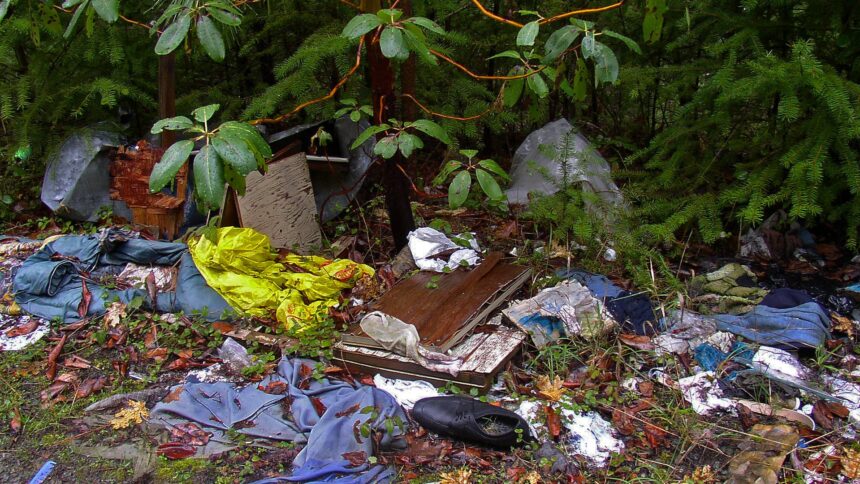
Alberta’s own release states the enforcement problem in one sentence. In 2025, the City of Calgary received about 30,000 illegal dumping complaints and almost 9,000 service requests on municipal property, and the city issued “165 tickets and three fines.”
The province now wants to raise the penalty. That is a proposal. The amendments to the Environmental Protection and Enhancement Act still need the legislature’s approval, and the government says it plans to introduce them this fall.
Key facts
- The Government of Alberta announced on September 30, 2026 that it plans to introduce amendments to the Environmental Protection and Enhancement Act this fall, and the proposals are pending legislative approval.
- Proposed fines for individuals run from a minimum of $10,000 to a maximum of $100,000, up from a current maximum of $50,000, according to the Government of Alberta.
- Proposed fines for corporations run from a minimum of $100,000 to a maximum of $1 million, up from a current maximum of $500,000, according to the Government of Alberta.
- The City of Calgary received about 30,000 illegal dumping complaints and almost 9,000 service requests on municipal property in 2025 and issued 165 tickets and three fines, according to the Government of Alberta.
- The Government of Alberta expects new registration requirements to apply to about 150 of the 684 waste transfer and storage sites in the province.
The proposal doubles the maximum and adds a minimum
Today an individual faces a fine of up to $50,000. Under the proposal the range would be $10,000 to $100,000, so the ceiling doubles and a floor appears. For corporations the current maximum is $500,000, and the proposed range is $100,000 to $1 million. Courts could also order jail terms for individuals, from 30 days to six months.
A minimum matters as much as a maximum. A floor means a conviction has a price attached.
A bigger fine does not help until someone has a name
Set the two Calgary numbers side by side. About 30,000 complaints produced 165 tickets and three fines. Calculated here from the release’s figures, the tickets equal about 0.55% of the complaints.
The release does not say how many complaints named a person, how many were duplicates or how many dumps sat on private land, so the ratio proves nothing by itself. What the figure does show is where a penalty gets applied. A $100,000 ceiling counts only after an officer has a licence plate, a witness or a camera.
The release says officers would get “stronger tools,” and it does not describe them. That is the part of the design a landowner should watch.
Cleanup still falls to whoever owns the land
The release says communities, landowners and taxpayers are often left with the clean-up costs and the environmental damage. It does not say whether a fine collected from an identified dumper would go back toward that cost. It does not say who pays when nobody is identified.
Those are program design questions, and landowners who find a dump on their property are the ones who pay for the answers.
Only about 150 of 684 waste sites would face new registration
The release also proposes provincial registration for higher-risk waste transfer and storage facilities, meaning those handling larger volumes or storing waste longer. The government expects that to cover about 150 of the 684 sites in Alberta, about 22% by simple division of the release’s figures. Lower-risk sites would stay under the existing notification process.
Report a dump, then ask what happened
The province asks anyone who finds illegal dumping or suspicious waste to report it to its 24-hour environmental response line at 1-800-222-6514 and to the local municipality. Early reports help officers find who is responsible.
Then ask the municipality how many of last year’s dumping complaints ended with a named person and a ticket. The answer will tell you more than the size of the maximum fine.
Related from Alberta Tribune: Alberta’s Origins Hub Will Store 1.5 Million Tonnes and Capture Nothing · Ask Which Part of the Good Ol Days You Actually Want Back · Small Alberta Towns Are Fighting Over Where Their Kids Will Live