

Most small town churches in Alberta are named after saints or after the founding minister. The Ralph Connor Memorial United Church in Canmore is named after a bestselling novelist. The novelist in question was a real person, a Presbyterian minister named Charles William Gordon who wrote under the pen name Ralph Connor and sold roughly five million books at the height of his career in the early twentieth century. The Canmore church carries his pen name because he preached in the town.
Who Ralph Connor actually was
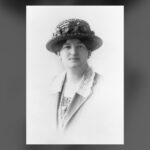
Charles W. Gordon was born in 1860 in Glengarry County, Ontario, to a Free Church Presbyterian family. He trained as a Presbyterian minister and was sent to Banff and the surrounding Bow Valley in 1890 to work as a missionary minister for the mining and logging camps in the corridor. He preached in Canmore, Banff, and the temporary camps along the railway and the mine sites.
He wrote his first novel, Black Rock, in 1898 based on his experience in the western camps. The book was a runaway commercial success. His subsequent novels including The Sky Pilot and Glengarry School Days made him one of the most widely read English-language novelists of the years before the First World War.
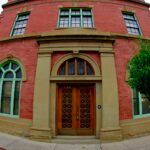
The 1891 building
- The original church on the Canmore site was built in 1891 to serve the growing mining community.
- The structure is a typical late nineteenth century western Canadian church. Wood frame, steeply pitched gable roof, a small bell tower, simple interior.
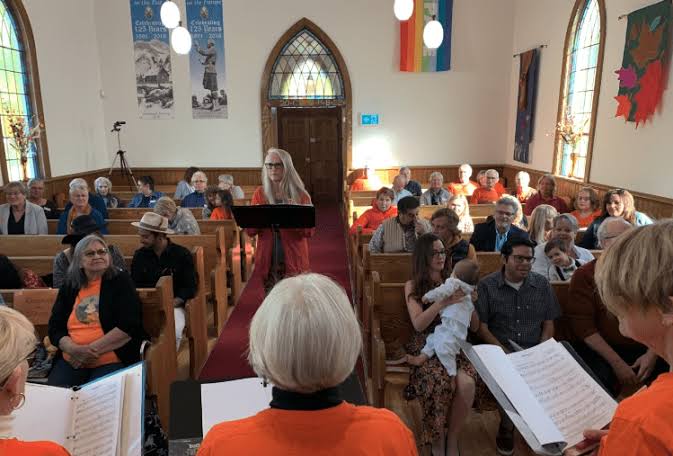
- The church served the Presbyterian community through the 1890s and 1900s.
- After the 1925 union of Methodist, Congregational, and most Presbyterian congregations into the United Church of Canada, the building continued as a United Church.
- The Ralph Connor name was added in 1942 when the congregation rededicated the building in honour of Gordon, who had died in 1937.
Why the building still matters
The church is one of the oldest surviving buildings in Canmore. It predates the coal mine boom that gave the town its real economic momentum and outlasted the mine closures of the 1970s. The structure has been continuously used as a place of worship since 1891.
The building is a designated Provincial Historic Resource and is listed on the Canadian Register of Historic Places as Site ID 10413.
The Ralph Connor link reaches past the church
The novelist was among the best-selling Canadian writers of his generation. His novels were translated, adapted for film, and read on both sides of the Atlantic. His most popular work was based directly on the western mining and logging camp culture he encountered in the Bow Valley.
Most Albertans never realize that cultural geography exists. A globally bestselling literary career grew out of the same Canmore that the modern town tries hard to remember as a coal mining settlement. The two stories belong together. Gordon’s books captured the working life of the camps in a way that no historical document quite manages. The church that carries his name is the local physical connection.
If you spend time in Canmore, the church is worth a stop. The interior is simple and intact. The connection to one of the most successful Canadian novelists of the late Victorian and Edwardian eras is built into the dedication. The fame travelled far, and the building that carries his name is still there to visit.
Related reading from the series. Canmore NWMP Barracks and the Mounties in the Bow Valley. Jasper House and the Athabasca Pass provisioning route.