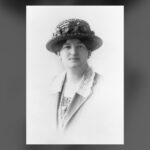


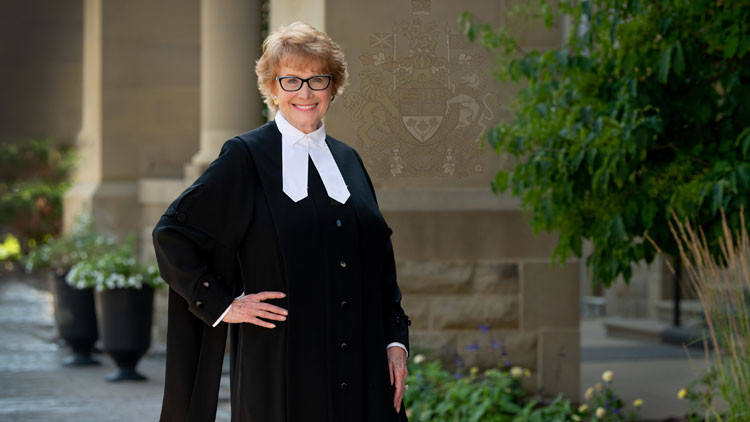
The Honourable Catherine Fraser spent three decades reshaping how justice is delivered in Alberta and beyond, becoming the first woman appointed Chief Justice in any Canadian province. Fraser, of Edmonton, was inducted into the Alberta Order of Excellence in 2024 for a career built on the belief that the law should produce fairness for everyone it touches, not only those it already serves well. Her influence reaches from Alberta’s courtrooms to judicial education programs from Australia to Zimbabwe.
A Household That Argued Its Way to Fairness
Catherine Anne Elias was born August 4, 1947, in Campbellton, New Brunswick, to Antoine and Anne Elias, whose families had immigrated from Lebanon and Ukraine. The couple met in Edmonton during the Second World War and later settled the family there in 1958. Fraser has said dinner table debate was a constant in her childhood home, and that her parents impressed on their children the importance of treating everyone fairly. She decided early that she wanted to become a lawyer, drawn to the profession as a vehicle for social change during a decade when the costs of discrimination against women were becoming harder to ignore. She began her studies at the University of Alberta in 1965 and met law student Richard Fraser in a political science class.
Breaking Into a Profession Not Built for Her
Fraser earned her Bachelor of Arts in 1969 and her Bachelor of Laws with Distinction in 1970, winning the George Bligh O’Connor Silver Medal in Law along the way. Even with a strong academic record, she found it difficult to secure an articling position as a woman, an experience that underscored how much the legal profession itself needed to change. She articled for Joseph Stratton, later her law partner and colleague on the Alberta Court of Appeal, and taught one of Canada’s first courses on Women and the Law while doing so. After being called to the bar in 1971, she and Richard completed Master of Laws degrees at the London School of Economics before returning to Edmonton, where she practised corporate and commercial law from 1972 to 1989.
Alberta’s First Woman Chief Justice
Fraser’s judicial career moved quickly. Appointed to the Alberta Court of Queen’s Bench in 1989, she joined the Alberta Court of Appeal in 1991 and was named Chief Justice of Alberta and Chief Justice of the Court of Appeal of the Northwest Territories in 1992, becoming, at 44, both the youngest person and the first woman to hold the role of Chief Justice in any Canadian province. When Nunavut was created in 1999, she added Chief Justice of the Nunavut Court of Appeal to her responsibilities. On the Canadian Judicial Council, she pushed to expand judicial education to include social context training on gender equality and racial and ethnic equity, work that grew into an accepted part of judicial education across the country. She carried that same advocacy into international programs in Australia, New Zealand, England, India, Pakistan, Sri Lanka and beyond.
A Career Measured in Decisions and Mentorship
Fraser’s written judgments addressed constitutionally guaranteed equality rights and the balance of power between federal and provincial governments, and her dissent in the Lucy the Elephant case helped open a Canadian legal conversation about animal rights. She reformed court governance in Alberta and was recognized with honorary doctorates from the Universities of Alberta, Calgary, Lethbridge and Windsor, along with the Canadian Bar Association’s Touchstone Award. Supreme Court of Canada Justice Sheilah Martin has called her a once in a generation Albertan devoted to the cause of justice. Fraser retired in 2022, and the province has since created the Chief Justice Fraser Scholarship in her name for law students at the Universities of Alberta and Calgary. Fraser and Richard live in Edmonton, where they raised Andrea and Jonathan, both of whom became lawyers, and where three grandchildren now carry the family’s story forward.