

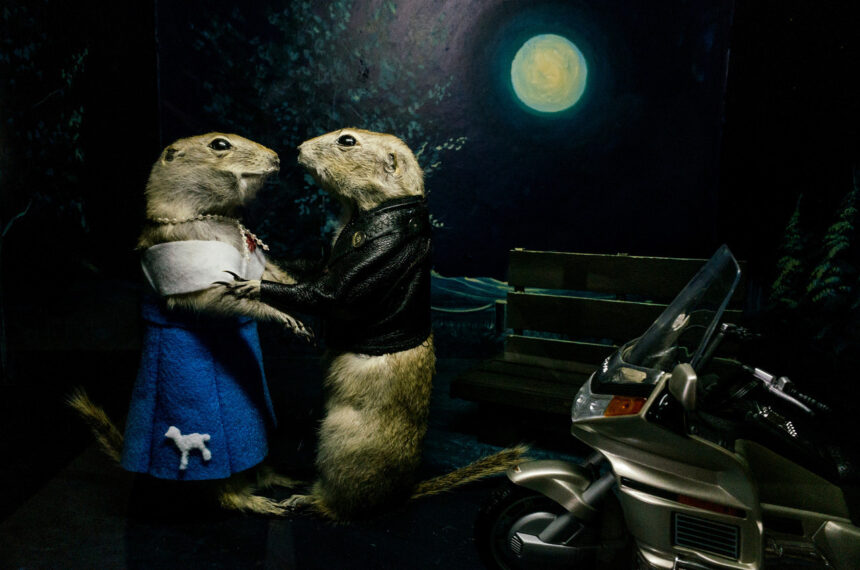
In a small museum in Torrington, a stuffed Richardson’s ground squirrel stands in a handmade diorama dressed as a townsperson, one of 71 gophers posed across 47 scenes by the University of Alberta’s count. The scenes include a beauty parlour, a pool hall, a diner and a curling rink, all built at gopher scale, and they sit in a double-wide trailer in a hamlet of fewer than 200 people.
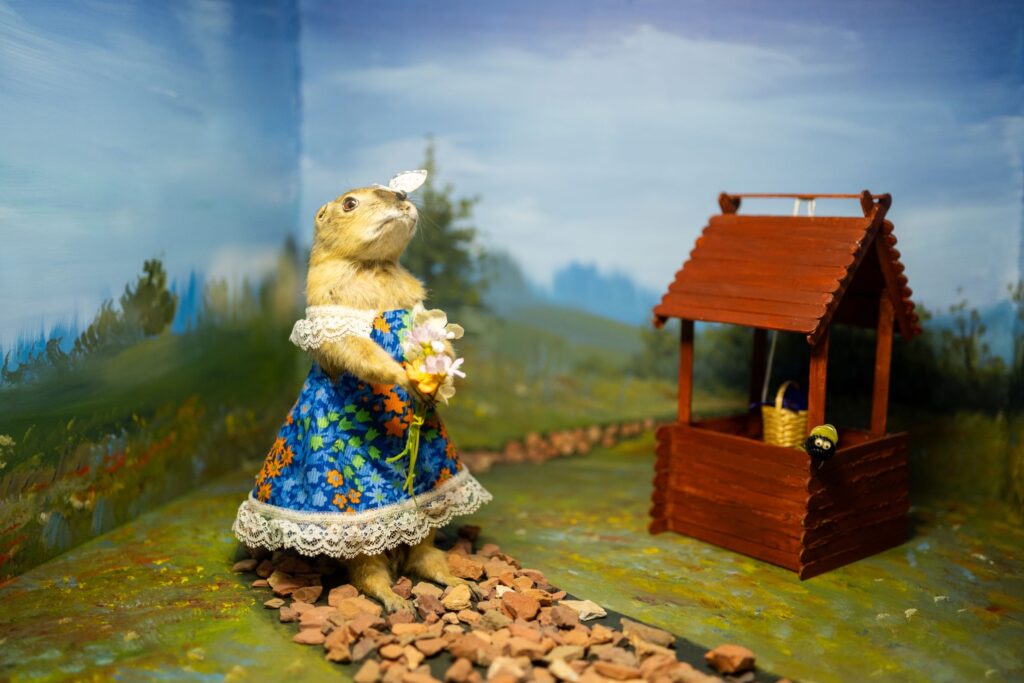
Key facts
- The University of Alberta’s Faculty of Arts reports that the Gopher Hole Museum in Torrington holds 71 taxidermied gophers in 47 dioramas and draws about 5,000 visitors a year.
- The eCampusOntario open textbook Canadian Art Histories states that the museum opened in 1996 and that an animal-rights protest before opening drew international attention after organizers replied with a card telling the group to “get stuffed.”
- The University of Alberta’s Faculty of Arts reports that the museum operates from a double-wide trailer in a hamlet of fewer than 200 residents.
A pest became the attraction
Gophers have long been treated as agricultural pests, a threat to crops and to livestock. The Torrington museum took that adversary and dressed it in a church-going, curling-playing version of small-town life. The idea began as a joke at a community brainstorm, and what the town built from it is a record of the places a prairie hamlet used to have.
The protest carried the museum’s name abroad
An animal rights group objected to the use of real gophers and asked for prefabricated models. The museum’s reply was a card telling the group to “get stuffed,” and the exchange drew international coverage that, by the University of Alberta’s account, increased visitor numbers. A hamlet with no marketing budget got a campaign it did not plan.
The published figures disagree and the column does not pick one
The opening year is 1995 in the University of Alberta’s account and 1996 in the open textbook. The provincial startup grant is $3,000 in one and $9,000 in another. The museum holds 71 gophers in 47 scenes in one count and 77 gophers in 44 scenes in another. Annual visitors run from about 5,000 to about 6,000 in the two accounts read for this column. The sources do not reconcile, and a museum that grew from a joke has never needed to.
The scenes are still posed in the trailer in Torrington.
Updated October 7, 2026. Published accounts differ on the opening year, grant, counts and visitors, and the column now says so instead of using one set.
Related from Alberta Tribune: Alberta Crops Going To Grazing Need A Published Acre Count · At 45, West Edmonton Mall Still Cannot Agree on Its Attraction Count · The Small Alberta Town That Built A UFO Landing Pad