

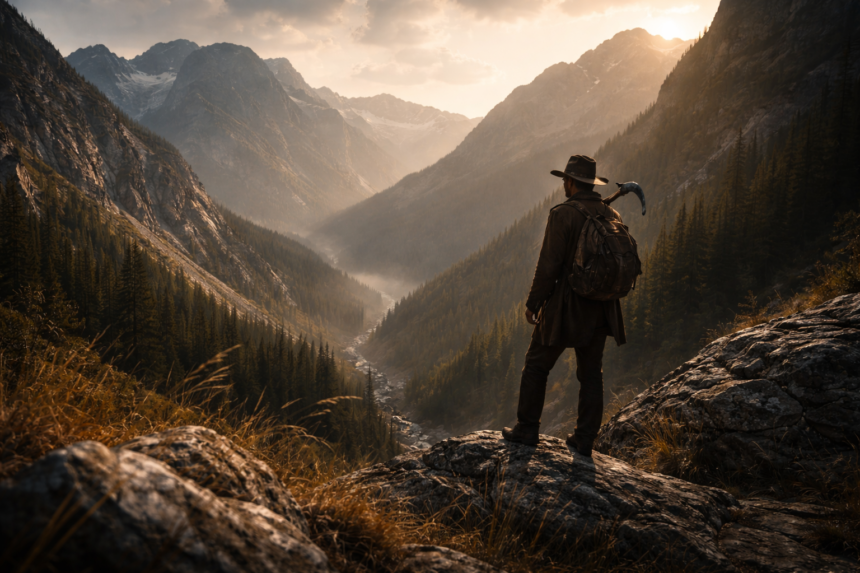
A legend that refuses to fade
In the late 1800s, before oil wells and pipelines defined Alberta’s wealth, another resource stirred the imagination of the foothills and mountains.
Gold.
The Lost Lemon Mine is one of Alberta’s most enduring legends. It has survived for more than a century without proof, without a confirmed discovery, and without a final answer.
That alone makes it part of our heritage.
The beginning of the story
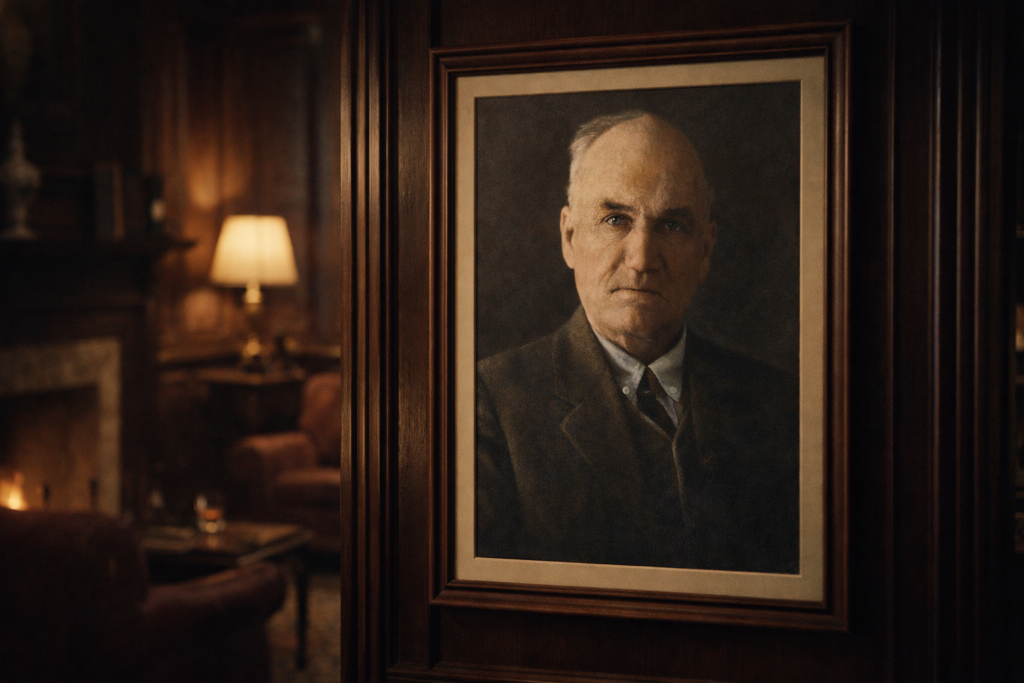
The tale begins around 1870. A prospector known as Frank “Lemon,” sometimes called Blackjack Lemon, was reportedly travelling through the Rocky Mountain region near today’s Alberta–Montana border.
According to early accounts published in Montana newspapers, Lemon claimed to have discovered a rich gold-bearing outcrop in a remote gulch. The story includes violence, a dead partner, and a hidden fortune that Lemon could never relocate.
Historical records confirm that Frank Lemon existed and was prospecting in the region. They confirm newspaper references to his claims. What they do not confirm is the mine itself.
That gap is where folklore begins.
How the legend moved north
Over time, the story migrated into southern Alberta. By the early twentieth century, former High River mayor and Alberta legislator Dan Riley became one of the strongest advocates of the Lost Lemon theory.
Riley believed the mine lay in the Crowsnest Pass or Highwood area on the Alberta side of the Continental Divide. He wrote about it, mapped theories, and inspired renewed prospecting efforts decades after the original discovery claim.
Search parties ventured into the mountains through the 1930s and beyond. None returned with proof of a bonanza.
But none definitively disproved it either.
Gold, geology, and possibility
Southern Alberta and western Montana are not devoid of mineral potential. Geological surveys have confirmed trace gold deposits in parts of the Rockies. Small-scale mining did occur in the broader region.
What has never been confirmed is the existence of a massive lost vein as described in legend.
And yet, the story persists.
That persistence matters.
The Alberta instinct
The Lost Lemon Mine is not simply about gold. It is about mindset.
Alberta has always been shaped by people willing to chase opportunity in uncertain terrain. Fur traders followed rivers into unknown territory. Ranchers pushed into open prairie. Coal miners tunneled into mountains. Oil explorers drilled where others saw empty land.
The Lost Lemon legend fits naturally into that pattern.
It represents the belief that somewhere, just beyond the visible ridge, there is something worth finding.
That belief built this province.
Risk, ambition, and frontier memory
The legend also reflects the harsh reality of frontier life. Prospecting in the Rockies was dangerous. Isolation, weather, and conflict were constant threats. Success required resilience and sometimes blind faith.
The story of Lemon’s discovery and failure to relocate the mine mirrors a larger truth about Alberta history.
Fortunes here have often required risk. Some succeeded. Many did not.
But the pursuit itself became part of the identity.
Why the story still resonates
Today, modern geological mapping and satellite imaging have reduced the mystery of the mountains. The odds of a massive undiscovered gold vein hiding in plain sight are slim.
Yet hikers in the Crowsnest Pass still scan exposed rock faces. Books about the Lost Lemon Mine still sell. Conversations about its location still surface.
Not because people expect to strike it rich.
But because the story reinforces a deeper narrative.
Alberta is a place where possibility feels real.
A province built on pursuit
The Lost Lemon Mine may never be found. It may never have existed as described. But its endurance reveals something more valuable than gold.
It reveals a provincial character drawn to exploration, unwilling to accept limits, and comfortable with risk.
From the fur trade to oil and gas to emerging industries today, Alberta’s history is defined less by certainty and more by pursuit.
The Lost Lemon legend survives because it mirrors that truth.
In the end, whether the gold was real matters less than the fact that people believed it could be.
And in Alberta, belief has always been a powerful force.