

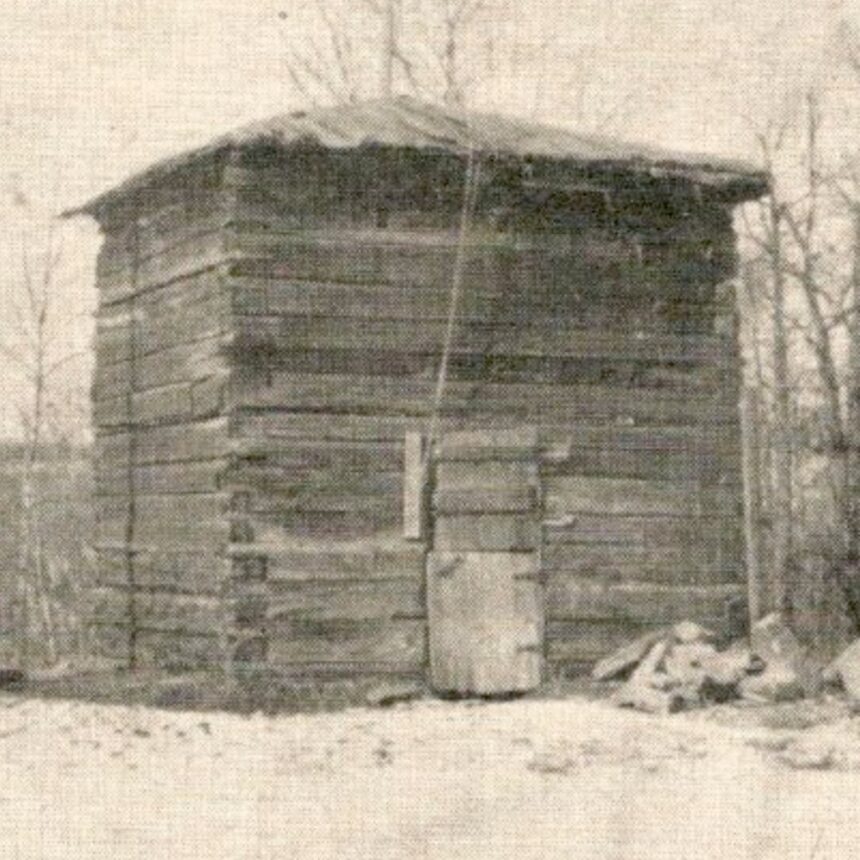
Fort Ethier is a log blockhouse about ten kilometres north of Wetaskiwin, on a small site beside Bigstone Creek. It was built in May 1885 during the North-West Rebellion and abandoned the next month once the rebellion was suppressed. It was never attacked. It still stands.
A military blockhouse raised in a few weeks
According to the Canadian Register of Historic Places, the fort was built by the Alberta Field Force under Major General Thomas Bland Strange to protect settlers while the rebellion played out farther east. Settlers in the parkland between Edmonton and Wetaskiwin had little reason to expect help to arrive quickly, and the blockhouse gave the district a defensible position beside the Calgary and Edmonton Trail.
What survives on the site
The register describes hand-hewn round and squared logs with half-lap corner joints, a pyramidal roof of overlapping rough-cut boards and three loopholes on each side of the upper storey. A ladder links the floors, and weathered inscriptions remain on the southwest wall.
The province protected it in 1997
Alberta designated Fort Ethier a Provincial Historic Resource on December 18, 1997, and it was listed on the Canadian Register on March 30, 2006. The designated site is only 0.2 hectares.
A small building that records a large scare
Most accounts of 1885 follow the columns that marched toward Batoche, Duck Lake and Fish Creek. Fort Ethier records what the same year looked like in central Alberta: a district that expected trouble and put up a defensive building within weeks. That kind of quick, practical preparation is a durable part of the province. The structure is evidence of it.
Correction. An earlier version said the Ethier family built the fort as a civilian refuge. The register says the Alberta Field Force built it.
Related reading from the series. Fort Macleod and the first NWMP outpost in southern Alberta. Victoria Settlement and the four cultures on one bend of the river.