

Albertans have a habit of being told they are late to something they are actually built to lead. The AI conversation is the latest example. Look at the history of this province and a different story comes into focus, one where Alberta builds the economy around the resource instead of chasing it.
Key facts
- Imperial Oil struck oil at Leduc, Alberta on February 13, 1947 after drilling 133 dry holes across Western Canada, according to the Government of Alberta energy timeline.
- The Calgary Petroleum Products Company’s Dingman No. 1 well struck wet gas at a depth of 780 metres in Turner Valley on May 14, 1914, according to Alberta’s Energy Heritage.
- Dingman No. 1 produced about four million cubic feet of gas a day, and the company behind it was formed in July 1912, the same Alberta’s Energy Heritage record states.
The discovery was never the point
On February 13, 1947, a drilling crew near what is now Devon struck oil at Imperial Leduc No. 1. It was well number 134, drilled after 133 consecutive dry holes and roughly $23 million spent. Within a decade the province had been transformed. Alberta became wealthy on what came after the well, the pipelines, the refineries, the capital markets, the regulatory frameworks, and the engineering culture that turned a discovery into a durable economy.
Turner Valley taught the harder lesson first
Three decades earlier, Turner Valley’s Dingman No. 1 struck wet gas on May 14, 1914 and set off the province’s first energy boom. For years afterward, enormous volumes of natural gas were flared off before proper conservation rules existed. Alberta learned from that waste. By 1947 the province was ready with more discipline and more infrastructure thinking. The resource was only ever the beginning. What you build around it decides what it is worth.
AI is Alberta’s next resource. This time the resource is distributed rather than buried under the prairie, and the work of building around it has already started.
Why this history is operational
The energy sector produced an engineering culture that understands large-scale infrastructure, long-horizon investment, and the management of complex systems under pressure. Agriculture developed a data orientation long before the word was fashionable. Construction built a workforce around sequencing and delivering complex outcomes on time. These are present-day strengths, and applied AI amplifies every one of them.
What building around it looks like now
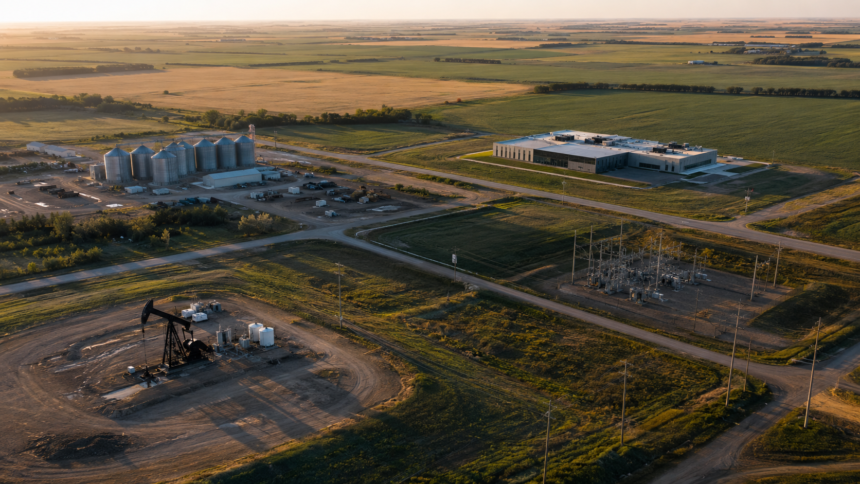
For AI, building around the resource means four things done deliberately: a workforce with genuine fluency, data governed and kept on Alberta-controlled infrastructure, guardrails that create confidence, and compute infrastructure built with the seriousness this province already gives to physical assets. Leduc could have been another Turner Valley. It was not, because Alberta had learned to build. The same choice is in front of Albertans again, and they are likely to make it the same way.
Frequently asked questions
What was Leduc No. 1?
Imperial Leduc No. 1 was an oil well that came in on February 13, 1947 near present-day Devon, Alberta. It was well number 134, drilled after 133 consecutive dry holes, and it set off the modern Alberta energy economy.
Why is AI called Alberta’s next resource?
Like oil and gas, AI is a deployable, compounding asset whose value depends on the infrastructure, governance, and skill built around it. Alberta’s operational strengths in energy, agriculture, and construction map directly onto what applied AI rewards.
What did Alberta learn from Turner Valley?
Turner Valley’s gas was flared off for years before conservation rules caught up. The lesson was that finding a resource is not enough. The discipline and infrastructure you build around it determine its real value.
This piece is part of the Alberta Tribune series on applied AI in Alberta. See also Alberta’s Energy Is the Launchpad for AI Infrastructure and The Distributed AI Province: Compute for All of Alberta.
A province that learned to build around its first great resource has no excuse for flaring off the next one.
Related from Alberta Tribune: Turner Valley and the First Oil Boom That Built Modern Alberta