Key facts
- Pizza Nite runs on the last Saturday of the month, excluding December. The 2026 schedule runs March through November.
- Every dollar of proceeds goes to building maintenance, improvements, and utilities.
- The price: $15 for a 12-inch two-topping pizza.
- Capacity: 350 pizzas a night. The ovens turn out 22 to 30 pizzas every 20 minutes.
- Up to 150 people pack Sam’s Saloon on a pizza night.
- Rowley sits 38 km north of Drumheller, at the edge of the badlands.
- The hamlet’s 1922 third-class CNorR station at Forth Junction was restored by the Canadian Northern Society.
Most small towns with a future problem hire a consultant. Rowley bought pizza ovens.
Here are the numbers. One Saturday a month, March through November in 2026, Rowley holds Pizza Nite. The price is $15 for a 12-inch two-topping pizza. Capacity is 350 pizzas a night. The ovens produce 22 to 30 pizzas every 20 minutes.
350 pizzas times $15 is $5,250 in gross pizza revenue on a sold-out night. Across the nine nights on the 2026 schedule, that tops out at $47,250 (a calculation, not a published figure). That is the economic development plan, and it has outlasted every grant program that ever promised to save rural Alberta. (Costs, ingredients, power, wear on the ovens, come out of that gross. The point is the top line belongs to the town, not a vendor.)
The hamlet’s own site states the policy plainly: proceeds go to building maintenance, improvements, and utilities. None of it goes to a festival or to marketing. It goes to roofs, wiring and furnaces.
Do the throughput math
The operation is the interesting part. Twenty-two to 30 pizzas every 20 minutes is 66 to 90 pizzas an hour. At that rate, a 350-pizza night needs roughly four to five hours of continuous oven time. Up to 150 people pack into Sam’s Saloon while it happens.
Call it a monthly manufacturing run rather than a restaurant. Dough, sauce, cheese, heat, repeat, for one night, at a scale most small-town cafes never touch. Then the ovens go cold for a month and the volunteers go back to their lives.
Compare that with the usual rural playbook: chase a single employer, offer tax incentives, build an industrial park, wait. Rowley skipped all of it. A regional farm paper calls it the busiest ghost town on the Prairies, one night a month. One night is enough when the margins go to maintenance.
What the money actually buys
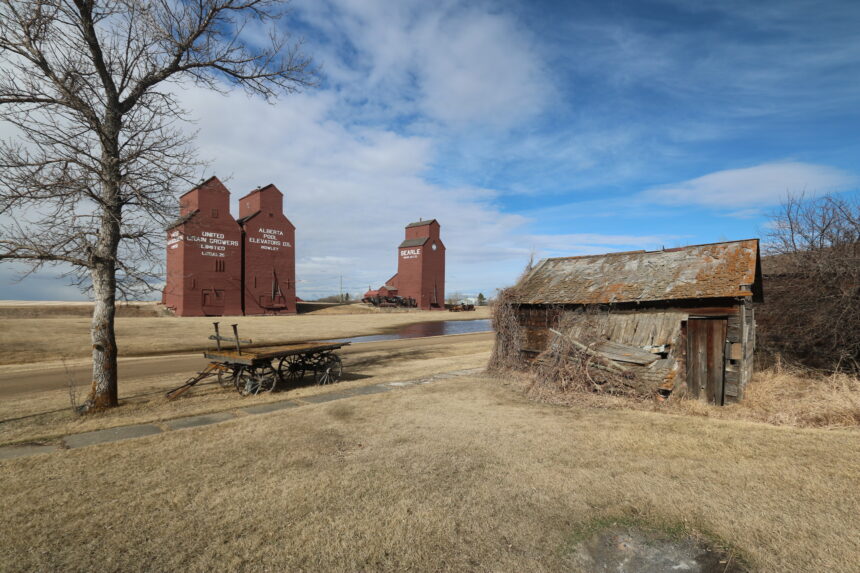
Heritage buildings are a liability until they are funded. Rowley has a street of them. The 1922 third-class CNorR station at Forth Junction, restored by the Canadian Northern Society, does not heat itself.
Every pizza sold is a roof shingle. That is the budget, literally. Maintenance, improvements, utilities, the three least glamorous line items in any heritage organization’s books, and Rowley funds all three with pepperoni.
Other Alberta towns fundraise the same way, on smaller scales. Bankhead proved what happens when the money stops, a boomtown can vanish overnight when the economics underneath it disappear. Rowley read that lesson backwards: keep the economics underneath, and the town never has to vanish.
Why investors never showed up, and why it never mattered
No investor would fund this. A monthly pizza night in a hamlet 38 km north of Drumheller does not scale. It cannot be franchised. The Hollywood chapter of Rowley’s story, the film shoots, the “Bye Bye Blues” fame, brought attention, not revenue. The railway tourism operation that ran from 1990 eventually died too.
The film fame paid in attention. Pizza pays in revenue.
The genius of the model is that it asks nothing from anyone outside Rowley. No provincial grant with reporting requirements. No corporate sponsor with naming rights. No tourism consultant’s five-year plan. Just 350 pizzas at $15 each, one night in each of nine months, and volunteers who know how to run an oven at full tilt for five hours.
Champion moved its buildings to the railway in 1910 because that was where the money was. Rowley moved the money to itself: the 2026 band schedule on the hamlet’s site shows the nights are booked out like a venue, because that is what they are.
The playbook, such as it is
Strip it down and Rowley’s model has four rules:
- One event, repeated monthly. A shift, not a festival.
- Fixed price, fixed product. $15. Twelve inches. Two toppings.
- Every dollar to maintenance, for survival rather than growth.
- Capacity is the marketing. 350 pizzas is the story.
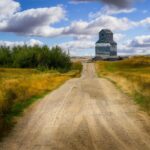
Could another town copy it? The Dorothy elevator photographs well, and the prairie sentinels draw visitors, but visitors take photos and leave. Pizza makes them stay for dinner and pay for the roof.
Rowley is a maintenance budget with a town attached, and the next test is whether the volunteer oven crew can keep it running.