

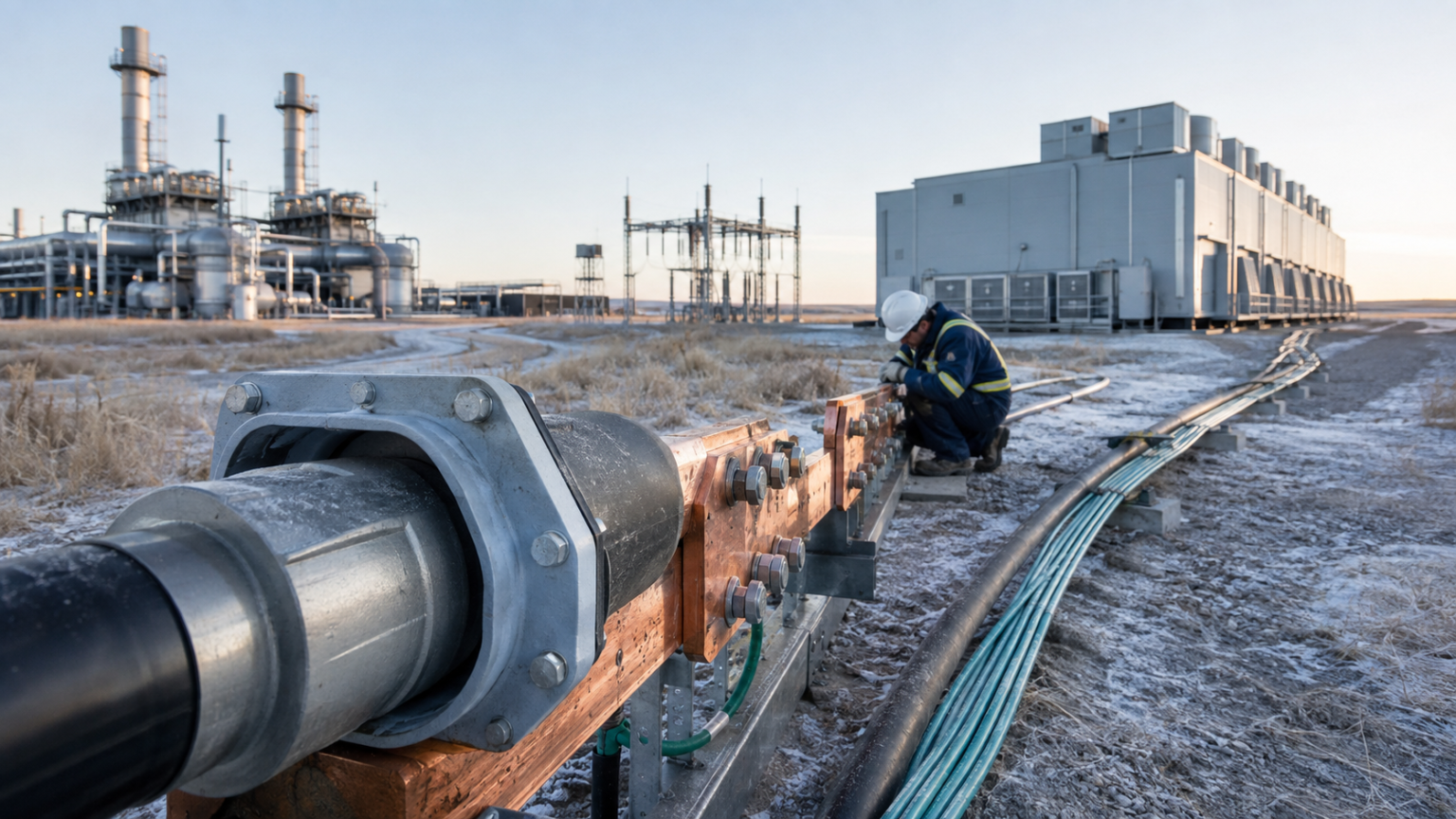

The Alberta AI Advantage will be measured by how much lasting value the province keeps from the systems built here. Data centres matter. Power matters. The harder work involves ownership, workforce capability, data control and execution inside real Alberta organizations.
That is the useful argument inside The Alberta AI Advantage 2026 Blueprint, an independent framework written by ZAK, CEO of ORKA AI. Its timing is good because Alberta’s infrastructure push is now moving faster than AI adoption across much of the economy.
The Alberta Electric System Operator reported more than 20,000 MW of proposed data-centre load on its project list in October 2025. AESO has since completed the first phase of its large-load program, allocating the full 1,200 MW interim limit between two contracted projects. That is a serious signal of demand. It is also a reminder that proposed capacity and connected capacity are very different things.
Alberta has already put power, cooling and economic growth at the centre of its official AI data-centre strategy. The independent blueprint widens the frame. It argues that infrastructure must be developed alongside workforce fluency, sovereign control of data and practical ethical guardrails. Applied industry execution sits underneath all four.
That broader frame is the right one.
Power can attract projects but ownership keeps the value
Alberta has spent generations learning a hard economic lesson. Supplying the raw input does not guarantee ownership of the finished value.
The AI version is easy to miss because the raw input does not leave on a railcar or through a pipeline. Under weak vendor terms, operational data can be processed outside Canada, retained or used to improve systems owned elsewhere. The Alberta company then pays for access through subscriptions, usage fees and long contracts.
Foreign cloud companies will remain part of Alberta’s technology base. Building every layer of the AI stack locally would be expensive and unrealistic. The practical requirement is for Alberta organizations to know what they own, what they license, where their information is processed and which rights they surrender when they sign a vendor agreement.
The blueprint calls for Canadian-controlled compute for sensitive workloads, permissioned data exchanges and standard licensing terms for industrial data. Those ideas deserve a serious hearing. Alberta’s energy, agriculture, construction and logistics sectors produce operational information that can train highly useful sector-specific systems. Treating that information as exhaust is poor business.
The adoption gap is wider outside the major cities
Statistics Canada reported that 19.2% of Canadian businesses used AI to produce goods or deliver services during the 12 months covered by its second-quarter 2026 survey. The national split was 21.0% among urban businesses and 9.9% among rural businesses.
Those are national figures, not Alberta-specific numbers. Still, the gap should matter here. A provincial plan centred in Calgary and Edmonton will miss many of the companies with the clearest applied use cases. Oilfield service firms, farms, fabrication shops, trucking companies and smaller municipalities often lack a chief technology officer. They also hold years of process knowledge and data.
The blueprint makes a sharp distinction between AI literacy and AI fluency. Literacy means understanding the technology. Fluency means using it inside a specific role to produce a defined result.
Executives need to judge vendors, spending and risk. Operators need tools that fit the job. Technical teams need current deployment skills. One generic course cannot serve all three groups.
Industry associations, chambers, agricultural societies, polytechnics and municipal networks are the practical distribution system. They already have the trust and reach that a new provincial program would spend years trying to build.
Guardrails should follow consequences
The blueprint’s three-tier risk model is sensible. A drafting assistant does not require the same controls as a system influencing medical care, hiring, public benefits or safety decisions.
Low-consequence uses can move with light controls. Customer-facing and operational systems need documented testing, named accountability and monitoring. High-consequence uses need stronger review, audit records and a real path back to a human decision-maker.
Alberta already has part of the legal and policy base. The Protection of Privacy Act came into force on June 11, 2025. Provincial guidance requires certain public bodies handling large volumes of personal information or highly sensitive information to establish policies for the use of that information in AI systems. The next task is turning those obligations into procurement standards that buyers and vendors can apply without months of confusion.
Good rules should make responsible deployment easier to buy. They should also make reckless deployment harder to hide.
The durable advantage is execution
The strongest idea in the blueprint is also the least glamorous. Advantage comes from execution as tools become cheaper and easier to replace.
The AI market will change repeatedly. Some vendors will disappear. Model prices will fall. Capabilities that look rare today will become standard features. Alberta should be cautious about betting public strategy on a particular tool or company.
Workforce capability, power infrastructure, governed data and disciplined procurement survive those product cycles. They are durable assets. Waiting for the software market to settle may be reasonable for a specific purchase. Waiting to catalogue data, train operators or set risk standards carries a real cost.
This is where the comparison to Leduc No. 1 earns its place. The well that struck oil on February 13, 1947 helped launch Alberta’s modern petroleum industry. The lasting advantage came from everything built around the resource, including skills, capital, infrastructure, regulation and operating companies.
AI demands the same institutional seriousness. Alberta can host compute without becoming an AI leader. It can consume AI without building an advantage. Leadership starts when the province connects infrastructure to ownership and connects strategy to measurable gains inside businesses and public institutions.
The free Alberta AI Advantage blueprint is worth reading because it gives that work a practical structure. Leaders should mark it up, challenge its assumptions and test its recommendations against their own operations.
Alberta has the energy to power a large share of Canada’s AI buildout. The province should insist on building the skills, rights and companies that let Albertans own a larger share of what that power creates.
Download The Alberta AI Advantage 2026 Blueprint