




Alberta has always been defined by what it builds.
- Why Artificial Intelligence Has Become Industrial Infrastructure
- The Case for Sovereign Alberta Data and Intelligence Ownership
- Distributed Micro Data Centres and Rural Economic Participation
- Addressing Grid Capacity, Environmental, and Workforce Concerns
- What Alberta Business Leaders Must Do Now
- AI Strategy for Alberta Executives and Enterprise Leaders
- Related from Alberta Tribune
Steel in the ground. Transmission lines across prairie. Industrial facilities that operate for decades. We understand scale, capital discipline, and operational reliability.
Artificial intelligence has now entered that same category. It is no longer a side project inside IT departments. It is infrastructure that consumes power, demands regulatory clarity, and influences long-term economic positioning.
Alberta is structurally positioned to lead in energy-powered AI infrastructure. The opportunity is real. The risks are real. The decisions we make over the next two to three years will determine whether Alberta becomes a recognized AI infrastructure hub in North America or remains a supplier of raw inputs to systems built elsewhere.
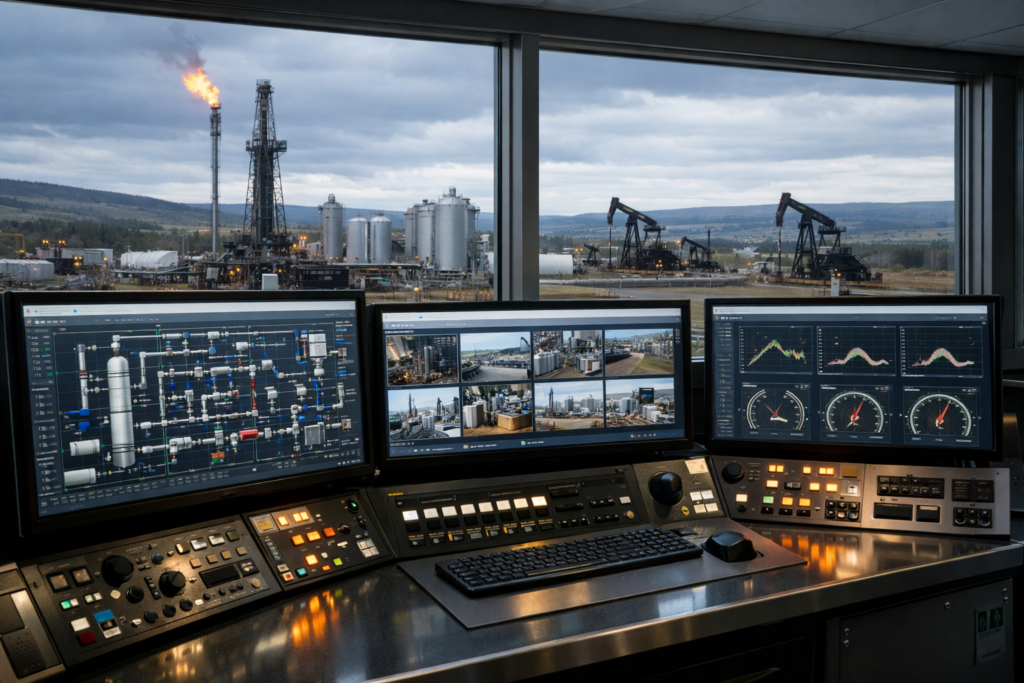
Why Artificial Intelligence Has Become Industrial Infrastructure
Modern AI data centres operate at industrial load. They require continuous electricity, stable multi-year pricing agreements, and grid reliability that cannot falter under pressure. Investors evaluate AI infrastructure the same way they evaluate refineries or manufacturing plants. They assess energy depth, permitting predictability, and policy stability.
Alberta offers abundant natural gas generation, deep transmission expertise, and a deregulated electricity market that allows flexible long-term power purchase agreements. Our permitting culture is accustomed to approving capital-intensive projects at scale.
These factors matter. AI infrastructure capital is flowing globally. Jurisdictions that provide clarity and reliability attract long-term commitments. Even a modest share of North American AI infrastructure investment would create sustained construction demand, high-skill technical roles, and expanded municipal tax bases across Alberta.
Energy is becoming digital infrastructure. Alberta already understands energy at industrial scale.
The Case for Sovereign Alberta Data and Intelligence Ownership
Energy and infrastructure are only part of the equation.
Alberta generates some of the most valuable industrial data in North America. Energy production metrics, reservoir performance analytics, agricultural yield patterns, construction scheduling systems, logistics optimization data, and manufacturing throughput intelligence are created here every day.
Artificial intelligence models are trained on operational data. The value compounds inside the model layer. If Alberta’s industrial data trains systems owned and governed elsewhere, the long-term economic advantage compounds elsewhere as well.
AI sovereignty in Alberta means retaining ownership of the intelligence built on Alberta data. It means establishing governance frameworks that protect proprietary advantage. It means ensuring that enterprise AI strategy is aligned with data control, valuation, and competitive positioning.
This is not abstract policy language. Intelligence ownership increasingly affects mergers and acquisitions value, capital allocation decisions, and long-term margin expansion.
Distributed Micro Data Centres and Rural Economic Participation
AI infrastructure does not need to concentrate in a single urban corridor.
Alberta’s geographic profile and grid structure allow for distributed micro data centres anchored to regional infrastructure. This model supports economic participation across rural communities, reduces single-point grid stress, and brings construction and skilled trades demand beyond major cities.
Regional compute nodes create local tax revenue and technical employment. They also reduce latency for industrial operations in energy, agriculture, and logistics sectors.
Distributed compute is not only a technical design choice. It is an economic development strategy for rural Alberta.
Addressing Grid Capacity, Environmental, and Workforce Concerns
Serious infrastructure decisions require honest discussion of risk.
Grid capacity must be managed carefully. Large AI loads cannot compromise residential affordability. Transparent large-load integration planning and structured power agreements are essential to protect households while enabling industrial growth.
Environmental accountability remains critical. AI facilities consume significant energy. Alberta’s competitive position depends on disciplined emissions monitoring, efficient siting, and continued advancement in energy technology.
Workforce anxiety is understandable. Automation will reduce some repetitive tasks. At the same time, demand will increase for AI operations specialists, industrial technologists, data engineers, compliance professionals, and skilled trades supporting new facilities. Reskilling and AI literacy initiatives across post-secondary institutions and industry partnerships must accelerate.
Overbuilding without anchor demand presents another risk. Infrastructure should follow signed operator commitments and phased deployment strategies, not speculation.
Alberta can pursue AI infrastructure responsibly. Discipline is required.

What Alberta Business Leaders Must Do Now
For executives across Alberta, artificial intelligence is now a board-level issue.
AI strategy influences capital allocation, operational efficiency, data governance, and long-term enterprise value. Treating AI as an optional tool limits competitive potential. Treating it as enterprise architecture strengthens positioning.
Leadership teams should:
- Conduct a structured AI readiness assessment tied to margin and operational efficiency.
- Establish an AI governance framework before scaling deployment.
- Classify and protect proprietary operational data.
- Develop a custom AI roadmap aligned with business objectives.
- Launch a pilot AI implementation strategy tied directly to measurable outcomes.
These actions move organizations from experimentation to disciplined execution.
AI Strategy for Alberta Executives and Enterprise Leaders
As CEO of ORKA AI and Founder of AIwithZAK.com, my focus is clear.
I work with business leaders on executive AI workshops, custom AI roadmaps, enterprise AI strategy, AI automation, AI agent implementation, and governance frameworks designed for industrial sectors. I host Executive AI briefings focused on practical adoption in energy, construction, agriculture, logistics, and manufacturing.
Alberta does not need to imitate other regions. We need to apply our existing strengths to a new infrastructure layer.
The province has energy capacity, industrial experience, and valuable operational data. Those assets create a meaningful advantage in AI infrastructure, AI consulting Alberta, AI strategy Alberta, and enterprise AI implementation across Canada.
The next 24 to 36 months will define Alberta’s position in North American AI infrastructure and industrial intelligence.
Alberta has built complex systems before. With disciplined leadership, we can build this one as well.