



Alberta artificial intelligence is shifting from academic discussion to economic strategy. In a province long defined by energy production, agricultural scale, and export driven industry, the emergence of AI presents a structural question. Can Alberta integrate artificial intelligence into its economic base in a way that strengthens competitiveness and supports long term employment?
- Infrastructure and Data Centres Alberta Expansion
- Industrial Artificial Intelligence Alberta Energy Applications
- Why Is Alberta Investing in AI
- How Will Artificial Intelligence Affect Jobs in Alberta
- Workforce and Institutional Readiness
- From Resource Base to Data Integrated Economy
- Related from Alberta Tribune
This is not about novelty. It is about infrastructure.
Alberta’s economy already operates on complex systems. Oil sands facilities manage high pressure extraction processes. Agricultural producers rely on advanced equipment and global supply chains. Industrial operators handle capital intensive assets that depend on precision and reliability. AI in Alberta is best understood as an extension of that systems culture.
The province has credible foundations. Research leadership at the University of Alberta and applied expertise at the Alberta Machine Intelligence Institute have given Alberta international standing in machine learning. The question is how that research strength connects to industrial deployment and economic capture.
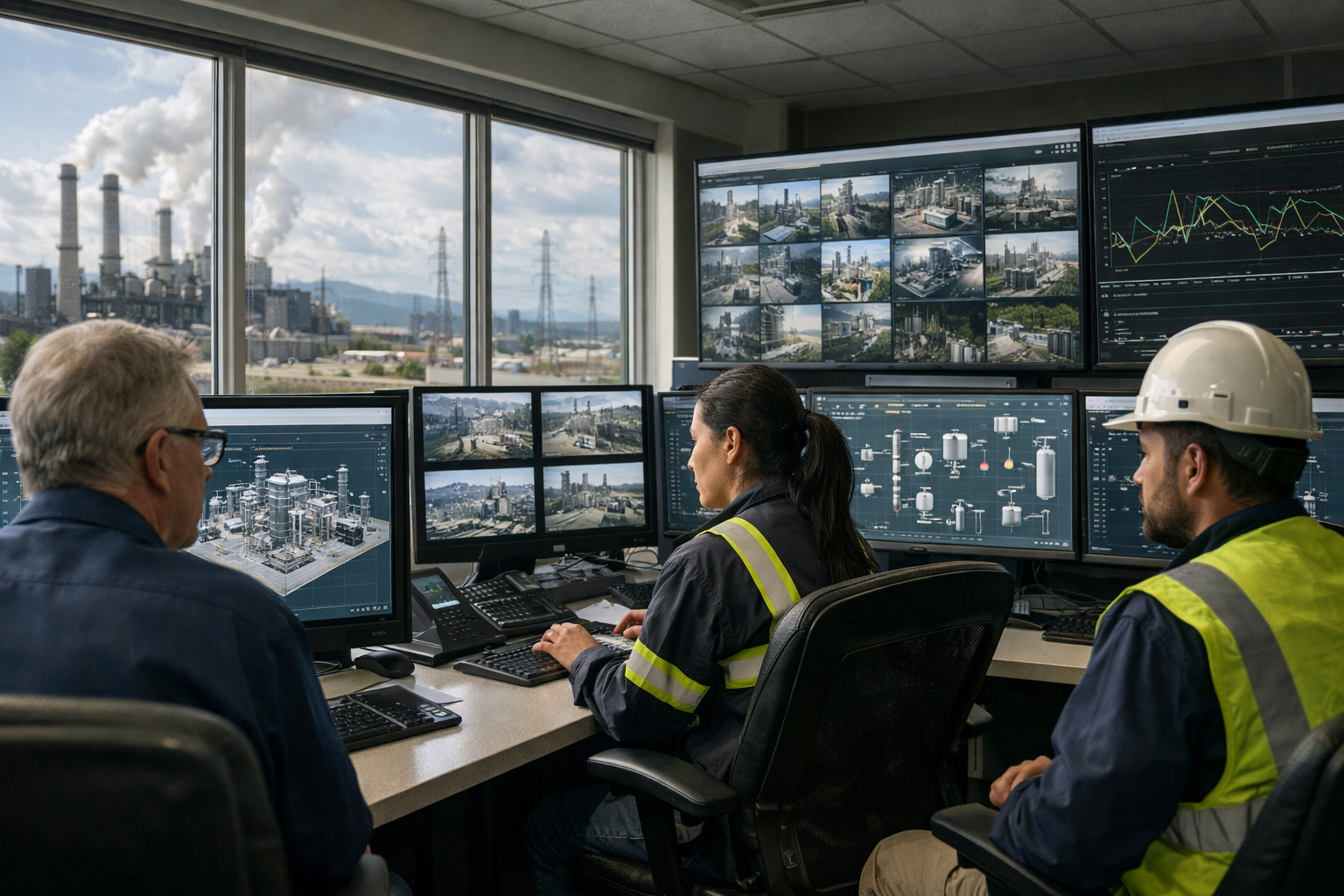
Infrastructure and Data Centres Alberta Expansion
Artificial intelligence requires computing power, cooling systems, and stable electricity supply. As data centres Alberta projects move from proposal to construction, electricity demand for data centres in Alberta becomes central to energy planning.
The province’s deregulated electricity market and experience serving industrial loads provide advantages. However, growth in AI infrastructure in Western Canada will depend on grid reliability, transmission capacity, and predictable regulatory processes.
Long term competitiveness is determined by fundamentals. Stable electricity pricing, coordinated permitting, and infrastructure investment influence where hyperscale computing facilities are built. Alberta must treat digital capacity with the same seriousness it once applied to pipelines and petrochemical plants.
If power supply becomes uncertain or regulatory signals fluctuate, capital will relocate quickly.
Industrial Artificial Intelligence Alberta Energy Applications
The most immediate economic gains are emerging inside existing sectors. Industrial artificial intelligence Alberta energy initiatives already support predictive maintenance in oil sands operations, drilling optimization, automated inspection, and emissions monitoring.
These applications produce measurable outcomes. Reduced downtime improves asset utilization. Enhanced monitoring strengthens environmental compliance. Advanced analytics improve recovery efficiency and safety performance.
Agriculture and transportation show similar patterns. Data driven forecasting improves crop management. Logistics algorithms optimize routing across long distances, lowering costs and improving reliability.
Alberta does not need to replicate consumer focused technology hubs. Its Alberta technology sector can build competitive strength through applied industrial systems that reflect the province’s economic structure.
This alignment between AI capability and industrial demand is where Alberta holds a realistic advantage.

Why Is Alberta Investing in AI
Alberta is investing in AI because the province combines research depth with industrial scale. University of Alberta AI research has global recognition. The Alberta Machine Intelligence Institute has attracted partnerships and highly trained talent.
Yet research excellence alone does not secure economic leadership. Alberta innovation policy must close the gap between discovery and deployment. That includes commercialization funding, procurement practices that allow domestic firms to scale, and partnerships between technology companies and established energy or agricultural operators.
A focused Alberta artificial intelligence strategy should prioritize local scaling. Intellectual property developed here should have pathways to market here.
Without deliberate policy alignment, Alberta risks becoming a major consumer of artificial intelligence while much of the economic return accrues elsewhere.
How Will Artificial Intelligence Affect Jobs in Alberta
Artificial intelligence will reshape skill requirements more than it will eliminate broad categories of employment in Alberta’s core industries. Routine monitoring and repetitive analytical tasks are increasingly automated. Demand grows for workers trained in data interpretation, digital systems management, and AI integrated operations.
Workforce adaptation will depend on accessible retraining programs, industry aligned credentials, and collaboration between employers and post secondary institutions.
The change is gradual but persistent. Firms upgrade systems over time. Hiring criteria evolve. Employees require opportunities to acquire complementary digital skills without leaving the labour force entirely.
Workforce and Institutional Readiness
AI workforce development Alberta initiatives must extend beyond new graduates. Many experienced engineers, technicians, and tradespeople possess strong mathematical and technical foundations. Targeted training in analytics, automation software, and digital diagnostics can extend careers and raise productivity.
Post secondary institutions should embed applied artificial intelligence into engineering, business, and technical programs. Cooperative education placements within industrial firms can ensure that graduates understand operational realities rather than abstract theory.
Governance readiness is equally important. Clear data governance standards, cybersecurity requirements, and responsible AI guidelines create certainty for investors and operators. Institutional clarity reduces friction.
From Resource Base to Data Integrated Economy
Alberta artificial intelligence will not trigger a sudden boom comparable to past commodity cycles. Its influence will accumulate through embedded productivity gains, research commercialization, and infrastructure expansion.
The province has navigated structural transitions before. The move from conventional drilling to oil sands development required new engineering methods, financing models, and regulatory oversight. Artificial intelligence represents a different kind of shift, but it also demands coordinated institutional response.
Transmission lines, data centres, research funding, immigration pathways for technical talent, and procurement strategies all form part of a connected system. When aligned, they reinforce one another.
Alberta artificial intelligence should be understood as infrastructure under construction. If the province integrates it deliberately into its economic framework, it can strengthen competitiveness and sustain employment across existing industries.
The opportunity is practical rather than dramatic. It lies in disciplined planning, institutional coordination, and steady integration into the industries that already define Alberta’s economy.