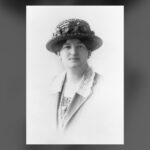


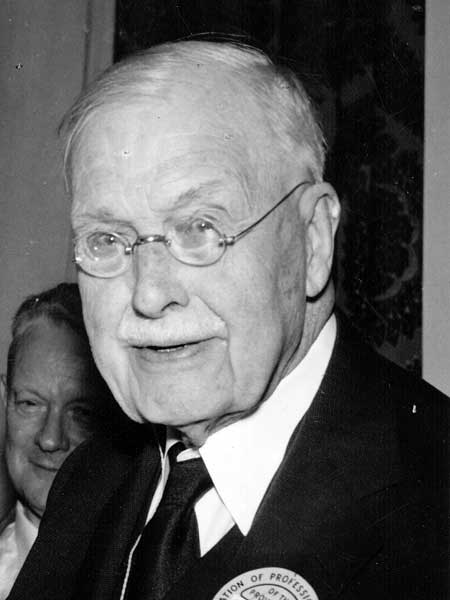
On August 12, 1884, a 25 year old surveyor working the Red Deer River valley for the Geological Survey of Canada came up out of a coulee holding a skull. He was not looking for it. He was mapping rock.
Key facts
- The Royal Tyrrell Museum dates Joseph Burr Tyrrell’s skull find near Drumheller to August 12, 1884, when he was 25 by his November 1, 1858 birth date.
- Henry Fairfield Osborn formally described the specimen in 1905 and named it Albertosaurus sarcophagus.
- The Royal Tyrrell Museum opened on September 25, 1985 and received its royal designation in 1990.
- The Royal Tyrrell Museum reports more than 170,000 specimens and over 525,000 visitors in 2023.
Joseph Burr Tyrrell had been sent west to do the unglamorous work of a young dominion, which was to find out what was actually in the ground. That season he came back with two answers. One of them built a town. The other one built a museum.
The coal was the part that mattered at the time
Tyrrell mapped the coal seams running through the valley behind what would become Drumheller. In 1884 that was the headline. A railway was pushing west, the prairie winters were what they had always been, and a documented seam of accessible coal was worth more to Ottawa than any old bone.
The mines followed. So did the men who worked them, the boarding houses, the rail spurs and eventually a town whose entire early economy sat on top of what that survey season wrote down. For most of the next 60 years, Drumheller was a coal town that happened to have strange rock formations nearby.
The skull sat unnamed for 21 years
The specimen Tyrrell carried out went east and waited. It was not formally identified until 1905, when the American palaeontologist Henry Fairfield Osborn described it and gave it the name Albertosaurus sarcophagus.
The animal got its Alberta name in the same year Alberta became a province. A province and a predator entered the record together, and one of them has been on school field trip itineraries ever since.
What the second discovery is worth now
The Royal Tyrrell Museum opened on September 25, 1985, a century after that survey season, and took his name. It received the royal designation in 1990. It now holds more than 170,000 specimens and counted over 525,000 visitors in 2023.
Drumheller has about 8,000 residents, so the 2023 visitor count works out to roughly 65 visitors for every resident, by simple division. The coal seams were finite. The bone beds are not going anywhere.
That is the economic story hiding inside a heritage one. Alberta spent a century building an economy on what it could pull out of the ground and burn. One of the most durable things pulled out of the ground here was something nobody could burn.
The habit of looking
The province is full of places that turned an accident of geography into a going concern. Vulcan did it with a name. Drumheller did it with a skull that a young man carried out of a coulee because he was curious enough to pick it up.
The hoodoos nearby now need protecting from the people who come to see them, which is a better problem than the alternative.
Tyrrell went on to a long career and lived to 1957, long enough to see the Leduc discovery of 1947. He got to watch the province he had surveyed as a young man turn into something nobody in 1884 could have drawn on a map.
He was sent to write down what was in the ground. He did the job thoroughly, and Alberta has been cashing that survey ever since.
Related from Alberta Tribune: The Alberta Coal Town Named After the Company That Built It