Key facts
- Site admission at the Atlas Coal Mine: $16.95 adult (18-64), $13.50 senior (65+) and youth (6-17), $9.50 child (3-5), free under 3. Guided tours cost extra. Atlas Coal Mine
- The site is open daily May 15 to September 7, 2026, 10 AM to 5 PM, with fall hours Wednesday to Sunday through October 11. Atlas Coal Mine
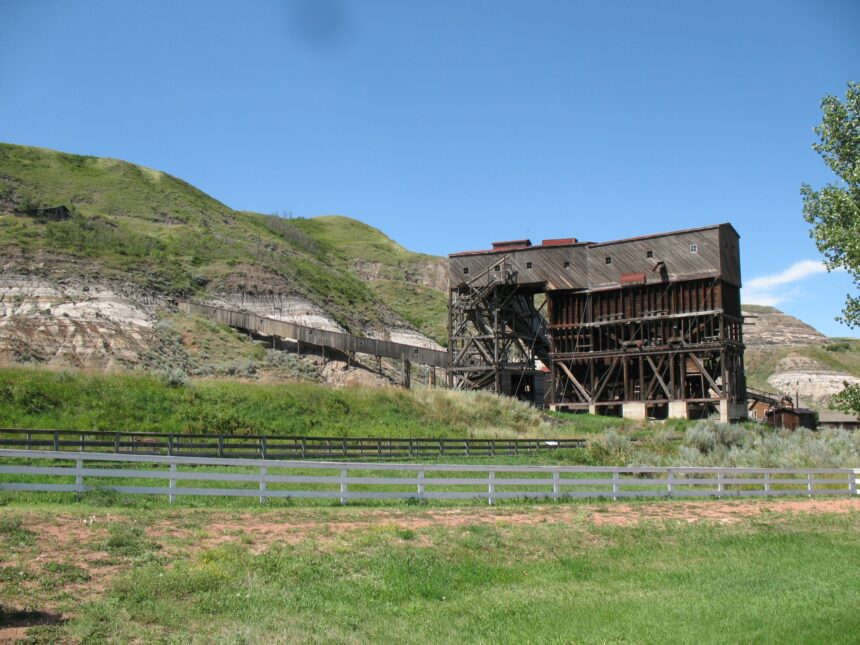
- The Atlas is a National Historic Site at 110 Century Dr, East Coulee, in the Drumheller valley.
- In January 2025, the province lifted its moratorium on coal exploration and development. Its Coal Industry Modernization Initiative bans new open-pit coal mining in the Eastern Slopes foothills and mountaintop removal, with new legislation to be drafted for government approval in 2026. Government of Alberta
What is a closed coal mine worth as a museum? At the Atlas Coal Mine near East Coulee, the terms are posted plainly at the gate. Adults pay $16.95. Seniors and youth pay $13.50. Children three to five pay $9.50, and the youngest get in free. Guided tours of the tunnel and the tipple cost extra, and buying a tour package saves 5 to 15%. Admission and tours The site opens May 15 and runs seven days a week through early September, then keeps fall weekend hours into October. Hours While the province reworks its coal rules, the Atlas makes its argument the old-fashioned way. It charges admission, and it keeps a National Historic Site paying its way.
The terms are posted at the gate
Start with the price list, because the price list is the point. Basic site admission buys a self-guided visit: acres of machinery, mining history and badlands scenery, with most visitors spending one to two hours on the grounds. The guided experiences, the tunnel tour, the tipple tour, the train ride, are priced separately, and the site sells them as packages at a discount. Groups of twelve or more can book custom tours, and school tours run year round. Tours and admission
The season is the other half of the terms. A summer operation, daily from mid-May to early September, extended into the fall on weekends. That is roughly five months of gate revenue to carry twelve months of a historic site: the buildings, the tipple, the grounds, the insurance. Anyone who has run a seasonal business in Alberta will recognize the arithmetic immediately. The margin for error is thin, the weather is a business partner with veto power, and the whole enterprise depends on people deciding, year after year, that a decommissioned coal mine is worth the drive from Drumheller.
A closed mine pays its way by selling the mine
It sells the one product it has left: the mine itself. The Atlas does not sell coal. It sells the experience of the coal industry at industrial scale, the tunnel, the processing plant, the machinery, the stories of the valley’s mining past, packaged as tours and priced by age bracket. The gift shop sells memberships and locally made goods, with every purchase, in the site’s own words, helping to keep the Atlas running. Site information
This is worth stating carefully, because it is the economic fact the broader coal debate keeps stepping around. A preserved industrial site, competently run, converts a liability, an abandoned mine in a worked-out valley, into a revenue-generating attraction. The conversion is not theoretical. It has a price list, a season, and a gate count. The mine that once sold coal now sells the experience of the mine, and the experience, unlike the coal, does not run out.
The province is rewriting its coal rules
The factual record, without adornment: in January 2025, the province lifted the moratorium on coal exploration and development that had been in place since 2022, through a ministerial order. Since then, the government’s Coal Industry Modernization Initiative has set the direction for what comes next. The initiative bans new open-pit coal mining in the foothills of the Eastern Slopes and bans mountaintop removal as a mining technique anywhere. It requires best water practices and no added selenium in waterways for any new proposal. New coal regulations and legislation are to be drafted for government approval in 2026. Coal Industry Modernization Initiative
That framework is the context in which the Atlas operates. The province is simultaneously writing new rules for coal’s future and hosting, in the Drumheller valley, a working demonstration of coal’s past as a paying concern. The two are rarely discussed together. They should be, because the Atlas is the one participant that can show, with a posted price list, that a coal site can earn its keep without digging another tonne.
The Atlas proves a coal site can earn without digging
Consider the two scenarios the debate usually offers. Scenario one: new coal development under the modernized rules, with whatever royalties and jobs it might eventually yield, measured years from now, contingent on legislation still being drafted. Scenario two: the Atlas model, preserve the industrial site, monetize the visits, keep the buildings standing and the guides employed, with the economics posted on the ticket board today.
The debate spends nearly all of its energy on scenario one and almost none on scenario two, yet scenario two is the only one with a price list. That is the Atlas’s real argument, and it does not need a slogan. A National Historic Site that pays for its own preservation is a proof of concept for heritage tourism as industrial policy: the past, kept standing, as a line item that earns rather than costs.
The next test has a date. New coal legislation goes to government for approval in 2026, according to the province’s coal industry modernization information sheet. Before that happens, the Atlas will sell another season of tickets at this year’s $16.95 a head, and the receipts will say what the talking points cannot.