


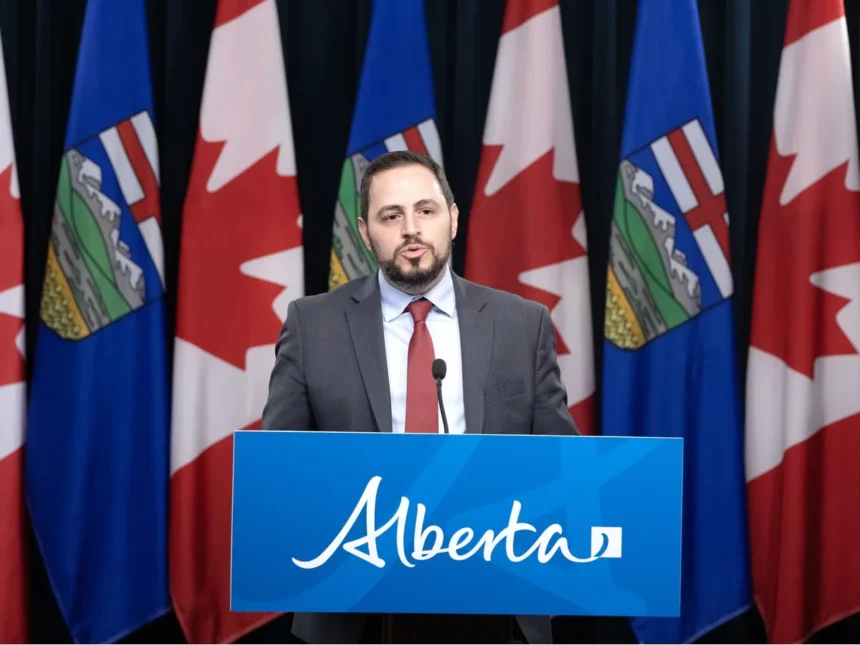
Alberta is installing 189 new modular classrooms for the 2026-27 school year, along with 12 new washroom units and 29 relocations. The package will add roughly 5,450 student spaces and costs $200 million this year alone. Budget 2026 commits $600 million over three years to keep the modular program rolling, as part of the broader $8.6-billion Schools Now plan that aims to create or modernize more than 200,000 student spaces by 2031-32. These are real numbers and they represent a genuine response to real pressure. They are not, on their own, a long-term solution.
The Numbers Behind the Crunch
Alberta added more than 80,000 new students to its classrooms over just three years. That figure reflects a combination of interprovincial migration, which has been running at record levels as Canadians follow jobs and lower housing costs westward, and federal immigration volumes that outpaced the capacity of receiving communities across the country. The province did not create either of those dynamics, but it is responsible for managing their consequences in schools. At 161 permanent school projects currently underway, the government is building. The modular program exists because permanent construction takes years and students arrive in September.
The bulk of the new modulars are concentrated in Edmonton and Calgary, where population growth has been most acute. Sixty-eight units, plus seven washroom structures, are being distributed across other school divisions, including fast-growing communities in the Edmonton metro ring and the Calgary exurbs. In those communities, a modular classroom is the difference between a functional school day and three students sharing a desk in a hallway. Parents understand this, which is why the program generates relatively little public controversy.
What Portables Cannot Do
Modular classrooms are engineered to be placed and removed. That is a feature and a limitation simultaneously. They do not include the gymnasium space, the science labs, the library capacity, or the common infrastructure that a full school building provides. A child who spends the majority of their elementary years in a modular unit attached to an overcrowded school is receiving a compressed version of the physical environment that school design is supposed to provide. Some of those children will have done nothing wrong except arrive in a growing province.
The risk that modular deployments carry is that they reduce political urgency around permanent construction. Once a crowding crisis is sufficiently addressed by a portable, the immediate pressure on the government to build dissipates. Portables last years in the field. Provincial governments have a long history of allowing the temporary to become the permanent by attrition rather than by plan. Alberta has made this mistake before. Aging portables sitting on school lots a decade after their intended removal are a feature of older Edmonton and Calgary campuses that anyone who attended school in those cities in the 1990s will recognize. For perspective on how Alberta’s population surge is straining more than just classrooms, see our coverage of the broader supply shortage facing fast-growing communities.
Holding the Line on Permanent Builds
The $8.6-billion Schools Now commitment is encouraging in scale. The question that parents, school boards, and taxpayers should be tracking is whether the 161 projects currently underway stay on schedule and on budget, and whether the pipeline of new projects keeps pace with demographic projections. Alberta Infrastructure publishes school capital planning data, and school boards file enrolment forecasts. Comparing those two datasets annually is a basic accountability exercise that school councils should be conducting and that local media should be covering.
Growth is the defining feature of contemporary Alberta. Families moving here from Ontario, British Columbia, and abroad are making a choice that reflects confidence in the province’s economy and future. Receiving them well includes building schools that match that confidence. A modular classroom is an honest acknowledgment that building takes time. A decade of modular classrooms is a failure of planning. The province is currently at the acknowledgment stage. Staying there is a choice. Property tax pressure in Edmonton underlines why getting infrastructure investment right the first time matters for municipalities, too.
The Metric That Matters
The measure of success for this program is not how many modulars get installed. It is whether the ratio of permanent student spaces to enrolled students improves each year. If the modular count keeps rising while the permanent construction pipeline stalls, the government will have spent $600 million solving a problem temporarily. If permanent builds proceed on schedule and modulars are progressively retired as new schools open, the program will have done exactly what a well-managed pressure valve should do: buy time without becoming a substitute for the real thing.
If your child’s school relies on modular classrooms, how long has that been the case, and do you see a permanent school in the community’s future?