


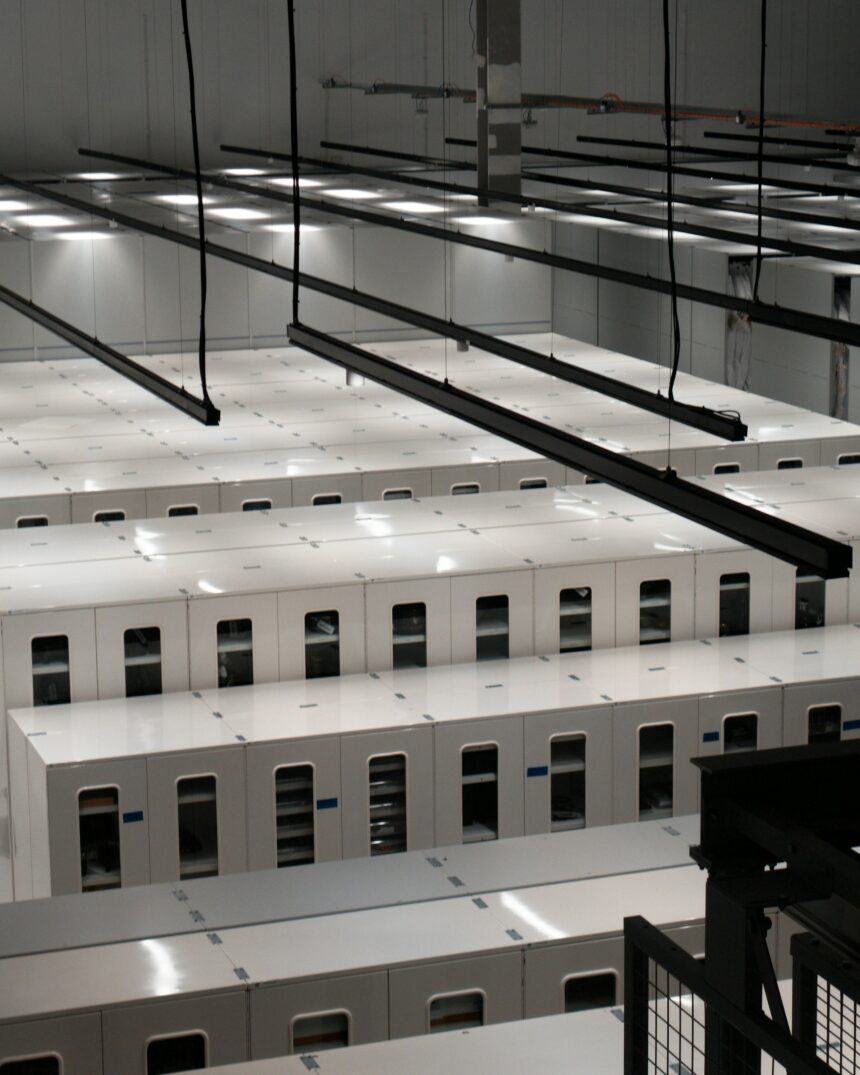
Alberta launched a new public website this week laying out its case for AI data centres, and attached to it are four actual meetings where residents can show up and ask questions face to face. Ponoka gets the first one on August 19. Sturgeon County follows on August 20. That consultation push now runs against a live test case, after the regulator rejected the gas plant meant to power a campus near Olds. A virtual session runs August 27 for anyone who can’t make the drive, and Grande Prairie closes the loop on September 11. That’s a real calendar with real dates on it, not a press release promising engagement at some point down the road.
The province says the numbers behind this push run between $100 billion and $200 billion in potential private investment. That’s a wide range, and it should be, because nobody knows yet how many of these projects get built versus how many stay parked on a slide deck in a boardroom somewhere. But even the low end of that range would represent the largest wave of private capital this province has seen outside the oil patch in a generation.
What Alberta Is Actually Asking For
Here’s where it gets interesting, because the province attached real conditions to that investment instead of just rolling out a welcome mat. No Alberta tax dollars go into these projects. Grid protection comes first, meaning the servers don’t get to eat power that was supposed to heat a house in Bonnyville during a January cold snap. Water use is tightly controlled rather than left entirely to a developer’s discretion. And municipal taxes, royalties and a computing equipment levy are structured so some of the return actually lands here, instead of flowing straight back to a head office somewhere else.
That last part matters more than it sounds like on paper. Plenty of jurisdictions have chased big tech investment by giving away the store, then wondered years later why the community got the noise and the traffic but not much of the money. Alberta’s approach at least tries to build a return in before the concrete gets poured, rather than negotiating from behind after the fact.
The Sturgeon County Yardstick
If you want a sense of scale, look at what’s already going up in Sturgeon County. Meta’s data centre build there runs past $13 billion for a single gigawatt of capacity. At peak construction it employed more than 3,000 workers, the kind of number that fills a hotel and keeps a diner’s grill running through the breakfast rush. Once the building is finished and the servers are humming, more than 300 permanent jobs remain on site. Those aren’t call centre jobs either. Running a facility that size takes electricians, HVAC technicians, network engineers and security staff working around the clock, every day of the year.
Multiply that kind of build out across a handful of sites and you start to understand why the province is treating this as an actual strategy with a name and a website, rather than a series of one-off ribbon cuttings.
A Website Is Not a Conversation
Alberta’s technology minister, Nate Glubish, said the new site puts “the facts about power, water and community impact in one place.” Fair enough. A page with facts on it beats a page without them. But a static site doesn’t answer the question a farmer near Sturgeon County actually has, which is what happens to his well water table once a facility that size starts drawing on shared infrastructure year round. It doesn’t answer what a Ponoka homeowner wants to know about noise from industrial cooling systems running through the night, or what a Grande Prairie town councillor needs to tell voters about road wear from months of heavy construction traffic.
That’s what the town halls are actually for, and it’s why they matter more than the website ever will. A folding chair in a community hall in Ponoka is a different kind of forum than a comment box buried three clicks deep on a government site. People can ask a follow-up question when the first answer feels rehearsed. They can push back in front of neighbours, and officials in the room have to respond on the record with those same neighbours watching.
The real test isn’t the website or the four dates circled on a calendar. It’s what happens inside those rooms once the questions turn specific, about water licences, about grid capacity during a cold snap, about what happens to the local tax base if a project stalls halfway through construction and the site sits half built for two years. Albertans have sat through enough public consultations that turned out to be little more than theatre with a sign-in sheet. These four meetings, spread across six weeks and four communities, are a chance to prove this round is different before a single shovel goes into the ground.
If a data centre broke ground next to your town tomorrow, what’s the first question you would want answered in that room?