

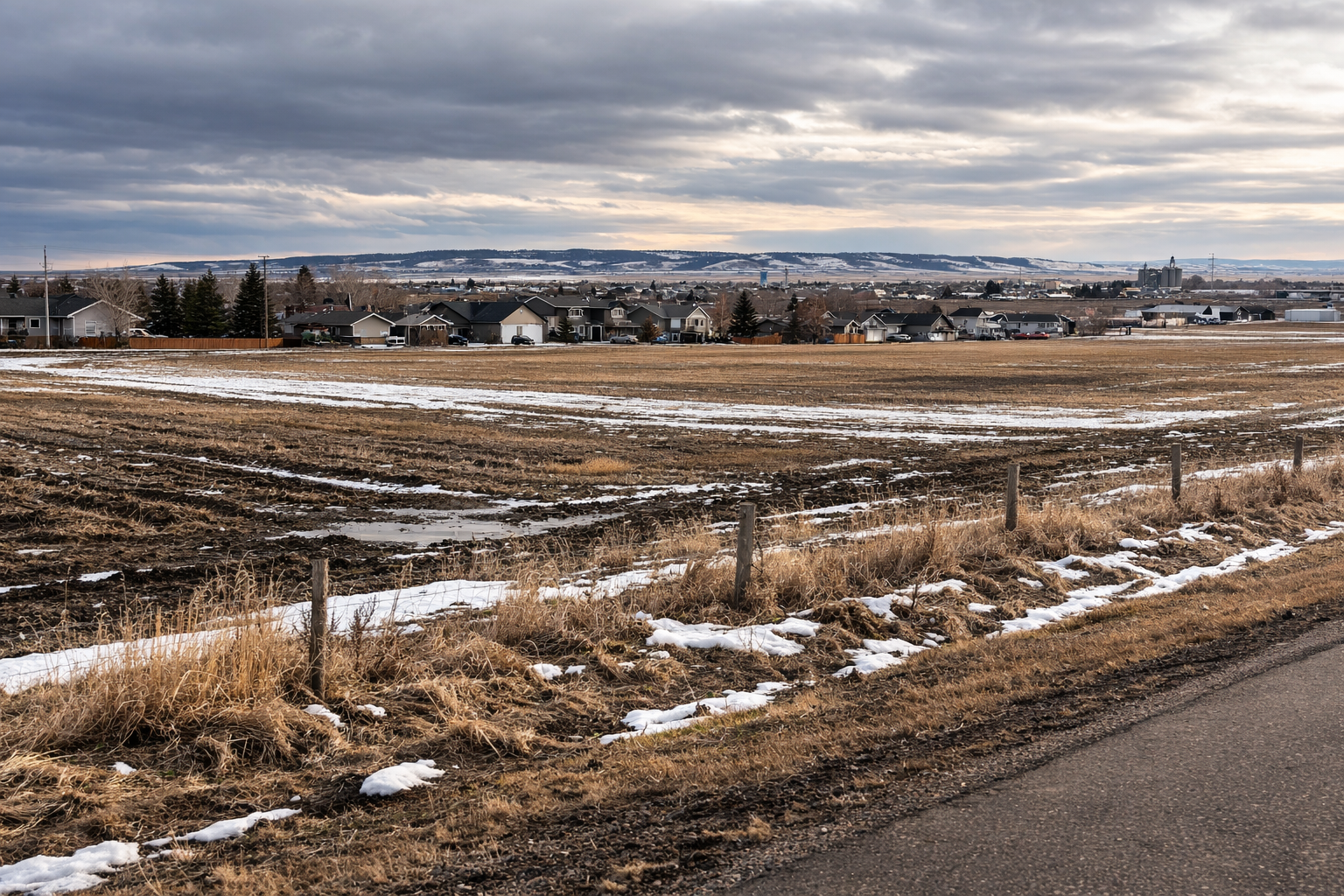

Alberta AI data centre in Olds tests the province’s bring your own energy gamble
A proposed Alberta AI data centre in Olds would rival the electricity demand of a major city and anchor one of the largest private power plants in the province. For a town of fewer than 10,000 people, that is not incremental growth. It is a structural shift.
- The Alberta AI data centre in Olds would reshape local power demand
- Bring your own energy is being tested in real time
- Olds faces a fiscal crossroads
- Residents deserve answers before ground is broken
- Alberta cannot afford to rush credibility
- Alberta AI data centre growth must align with provincial jurisdiction and accountability
- FAQ
The project forces Alberta to answer a hard question. Can the province chase artificial intelligence investment at full speed while keeping local trust and environmental oversight intact.
The Alberta AI data centre in Olds would reshape local power demand
The proposal in Olds calls for a data centre campus backed by a dedicated natural gas power plant rated at 1.4 gigawatts. The developer has said that much generation would be built to serve the facility on site, separate from the provincial grid under Alberta’s bring your own energy approach.
Alberta’s grid and data centre demand
According to the Alberta Electric System Operator, proposed data centre projects seeking power in the province add up to more than 21 gigawatts of potential demand. The AESO has also reported that the first intake of grid capacity for data centres was capped at 1.2 gigawatts, which was fully allocated.
For context, AESO data show that Alberta’s average electricity demand typically ranges in the high single digit to low double digit gigawatt range depending on season and economic activity. A single 1.4 gigawatt plant dedicated to one campus would rank among the largest sources of generation in the province.
Those are not abstract numbers. They translate into emissions, fuel supply contracts, transmission questions and long term infrastructure commitments.
Bring your own energy is being tested in real time
In 2024 the provincial government unveiled a data centre strategy that explicitly encourages developers to supply their own power. The theory is simple. If large AI facilities build on site generation, they avoid straining the provincial grid and keep costs predictable.
Natural gas and emissions oversight
Natural gas generation is regulated by the Alberta Utilities Commission and environmental approvals fall under provincial legislation. Nitrogen oxides and greenhouse gas emissions from gas fired plants are subject to provincial standards and federal carbon pricing rules.
The developer behind the Olds proposal has indicated that regulatory applications have been filed. Until those approvals are granted, timelines remain uncertain. Large scale generation projects typically require detailed environmental assessments, public notice and technical review.
Alberta’s bet is that this regulatory framework can handle a wave of private generation tied to data centres. That assumption deserves scrutiny.
Olds faces a fiscal crossroads
Olds has struggled with municipal finances in recent years. The town previously invested in a fibre optic network that was later sold at a loss. Like many Alberta communities, it has faced pressure from reduced provincial transfers and rising infrastructure costs.
A multi billion dollar industrial assessment base would change the property tax equation overnight. Industrial facilities of this scale can generate significant non residential tax revenue, though final amounts depend on assessed value and provincial tax rules.
For a council trying to stabilize its books, the appeal is obvious. New utility extensions funded by a private developer can also open land for future commercial growth.
But fiscal relief is not the same as community consent.
Residents deserve answers before ground is broken
Residents near the proposed site have raised concerns about proximity to homes, wetlands and Olds College lands. Questions about air emissions, noise, water use and emergency planning have surfaced in public meetings.
Water use and closed loop cooling
The company has stated that it plans to use closed loop water cooling systems. Closed loop designs are intended to reduce ongoing water withdrawals, though they still require initial filling and periodic maintenance.
If approved, monitoring and reporting conditions would need to be clear. The Alberta Environment and Protected Areas ministry would typically require compliance with provincial standards for water, wastewater and air emissions.
Rural communities are not anti development by default. They are cautious when a project of this magnitude arrives quickly.
Alberta cannot afford to rush credibility
Premier Danielle Smith has publicly welcomed large scale data centre investment. The province has positioned itself as an energy rich jurisdiction capable of powering the AI economy.
There is a case for that strategy. Alberta has abundant natural gas reserves, an established power market and technical expertise in large industrial projects. Federal funding tied to data sovereignty and digital infrastructure also adds momentum.
But credibility is built through process, not press releases. If construction were to begin before key regulatory approvals are in place, even if technically permissible for certain site work, public trust would erode.
Alberta’s competitive advantage has always been speed paired with competence. Lose the second part and the first becomes a liability.
Alberta AI data centre growth must align with provincial jurisdiction and accountability
Artificial intelligence infrastructure is not a passing trend. Global investment in AI data centres is accelerating, driven by corporate spending and government interest in domestic computing capacity.
The question for Alberta is whether it can anchor that growth without overconcentrating risk in small communities. A 1.4 gigawatt campus in a town of under 10,000 residents is not a minor zoning adjustment. It is a transformation of land use, emissions profile and economic structure.
Albertans support strong local economies and responsible energy development. They also expect full regulatory review, transparent data and meaningful consultation.
If the Olds project proceeds, it should do so with enforceable emissions limits, clear water management plans and binding community engagement commitments. Anything less undermines the very investment climate the province is trying to cultivate.
Alberta wants to power the AI economy. It must prove it can do so without sidelining the people who live beside the turbines.
FAQ
How much electricity would the Olds Alberta AI data centre use
The proposal references a dedicated 1.4 gigawatt natural gas plant to serve the campus. That level of generation would place it among the largest facilities in Alberta and comparable to major urban demand depending on conditions.
What is Alberta bring your own energy for data centres
The provincial data centre strategy encourages large facilities to build their own on site generation instead of relying solely on the provincial grid. The goal is to protect grid reliability while attracting investment.
Who regulates natural gas power plants in Alberta
The Alberta Utilities Commission oversees approval of power generation facilities. Environmental standards are enforced under provincial legislation by the responsible ministry.
Could data centres overwhelm Alberta’s power grid
The Alberta Electric System Operator has reported more than 21 gigawatts of proposed data centre demand in application stages. That exceeds average provincial load, which is why the province capped initial grid allocations and promoted private generation.
What does a large AI data centre mean for a small Alberta town
It can mean new tax revenue and infrastructure investment. It can also mean increased industrial activity, emissions and land use change. The outcome depends on regulatory conditions and long term community oversight.