

Edmonton’s first airport didn’t start with a ribbon cutting or a runway built for the purpose. It started with a mayor filling out paperwork for something the city didn’t yet have a proper word for, an “air harbour,” on a stretch of land north of downtown that had been farmland not long before.
A City That Still Ran on Trains
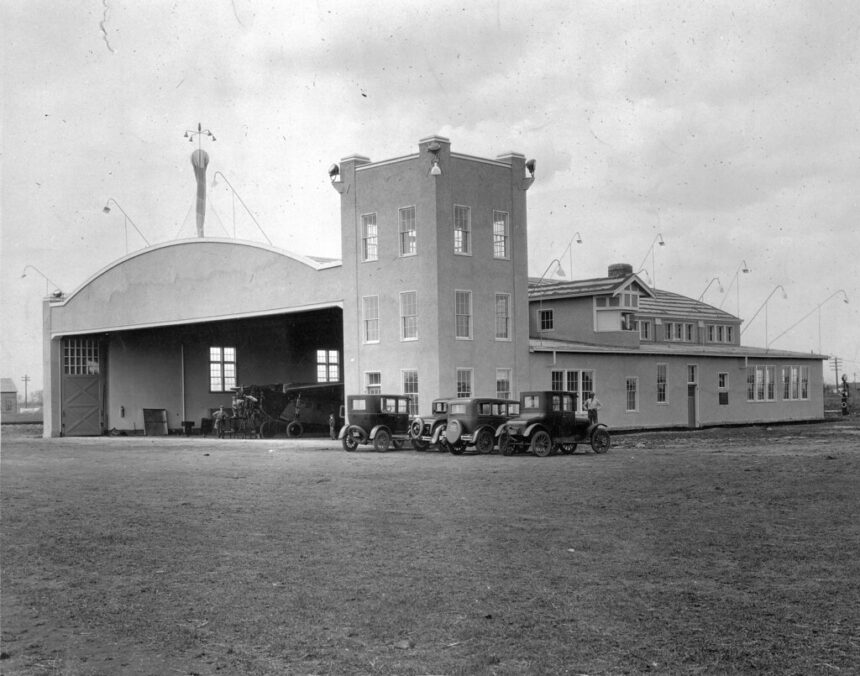
In May 1926, Edmonton’s mayor applied for a licence for that air harbour, and city council signed off on three runways laid across land the city had already purchased north of downtown. It was a strange bet for the era. Edmonton in 1926 still moved people and freight almost entirely by rail, and airplanes were a novelty most residents had only read about in the newspaper rather than watched land.
The paperwork came back in June 1926. Licence No. 72 made Edmonton’s field the first municipal air harbour licensed anywhere in Canada, a small bureaucratic milestone for a city that had no particular reason to think aviation would matter much to its future.
Voters Said No
Enthusiasm cooled fast. By 1928, city voters were asked to fund an expansion of the field and turned the request down. Whatever excitement had carried the original licence through council two years earlier hadn’t translated into public appetite for spending more money on a grass strip most Edmontonians had never had reason to visit.
What changed the calculation wasn’t a sales pitch. It was an emergency. In January 1929, an outbreak of diphtheria in Fort Vermilion left the northern community without enough antitoxin to treat it, and the fastest way to get medicine there was by air. Two pilots flew it north in an open cockpit, through winter weather that by most accounts should have grounded anyone with better options. They got the antitoxin there. Council found the expansion money not long after, the kind of about-face that only happens once a hypothetical becomes a headline.
Decades as Edmonton’s Way North
The field grew into what became known as Blatchford Field, later Edmonton City Centre Airport, and it earned its keep for the better part of a century. It trained aircrew during the Second World War, when Edmonton’s location made it a natural staging point for routes north and west. In peacetime it carried freight into communities that no highway reached, the same basic role the 1929 antitoxin flight had proven out, just repeated thousands of times over with less drama attached to each trip.
That run ended in 2013, when the airport finally closed. The land didn’t sit empty. Blatchford, the residential neighbourhood now rising on the old airfield, carries the name forward even as the runways themselves are long gone under streets and foundations.
An Anniversary Worth Noticing
Edmonton didn’t stop at the paperwork in 1926. The city followed with a formal dedication the next year, a ceremony that lands its own centennial in 2027, a hundred years after a field of farmland north of downtown became something the rest of the country pointed to as a first.
Picture what the field must have looked like on an ordinary flying day in the 1930s, propellers turning over in the cold, ground crews in heavy coats checking skis instead of wheels through the winter months, pilots filing flight plans for settlements most Edmontonians couldn’t have located on a map. That was the daily rhythm of Blatchford Field long before anyone called it a heritage site, just a working airstrip doing the unglamorous job of connecting a young province to places the railway never reached.
By the time the Second World War arrived, the same strip of land that had once needed a medical emergency to justify its own expansion was training aircrew for service overseas, a transformation that took barely thirteen years from a mayor’s tentative application to a facility doing wartime work. Aviation moved that fast through Edmonton’s first decades with it, and the field kept pace each time, adding hangars, lengthening runways, absorbing whatever the next stretch of history asked of it.
It’s easy to drive through Blatchford today and never think about what used to happen there, the engines warming up before a run north, the anxious wait in January 1929 for word that the antitoxin had gotten through. But the field’s whole history, from a mayor’s application in 1926 to a neighbourhood full of new homes today, is a reminder of how much of a city’s shape gets decided by a handful of ordinary, unglamorous decisions that nobody thought to write down as history at the time.