

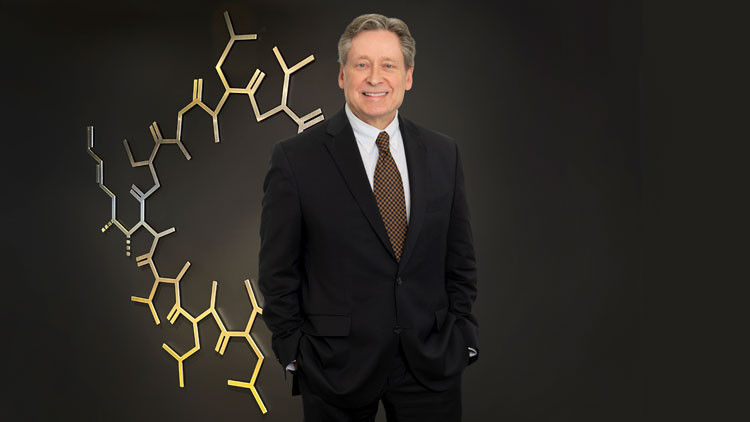
Dr. Robert Foster has spent nearly four decades moving between the lab bench and the boardroom, chasing drugs that did not yet exist. The Edmonton pharmaceutical scientist, inducted into the Alberta Order of Excellence in 2024, is one of a small number of Canadian researchers to discover a drug that won approval from the United States Food and Drug Administration. His work on organ transplant and autoimmune medicine has changed treatment for thousands of patients, and it started with a kid fixing forklifts at his father’s sawmill.
Learning to Solve Problems at 13
Robert Thomas Foster was born June 10, 1958, in Edmonton, the middle child of Frederick and Deloyce Foster. His father, a Manitoban and Second World War veteran of the Normandy invasion, ran sawmills and heavy equipment operations in Alberta, and put Robert to work at one of them at age 13. Foster has said that lying in mud and freezing rain fixing a forklift transmission taught him self-sufficiency and problem solving under pressure. He was also a musician, playing piano and trumpet from an early age, and enrolled at the University of Alberta at 18 hoping to pursue a music career. Throat surgery in his twenties ended that plan, and Foster returned to a childhood interest in organic chemistry instead.
Building a Career and a Family in Pharmacy
Foster completed a B.Sc. in chemistry in 1979 and a B.Sc. in Pharmacy in 1982, the same year he married Caroline Savage, a nursing graduate. In 1985 he became the first person in Canada to complete a Doctorate in Clinical Pharmacy, followed by a Ph.D. in Pharmaceutical Sciences in 1988. He joined the University of Alberta’s Faculty of Pharmacy and Pharmaceutical Sciences as an assistant professor that same year, rising to associate professor in 1993, all while raising four children with Caroline. His research focus turned to cyclosporin, the standard drug for organ transplant patients at the time, and its tendency to damage the same organs it was meant to protect.
From University Lab to Global Licensing Deal
In 1993, Foster left the safety of tenure track research to found his own biotech company, Isotechnika Pharma, eventually resigning his university position in 1997 to pursue drug development full time. He built a team from University of Alberta graduates at a moment when plenty of people doubted a homegrown Alberta company could develop a drug at all. In 1997 his team discovered voclosporin, and in 2002 Foster negotiated a licensing deal worth $215 million US with Switzerland’s Hoffman-La Roche, the largest such deal in Canadian history at the time. When Roche later withdrew, Victoria-based Aurinia Pharmaceuticals picked up the drug’s development. Isotechnika eventually acquired Aurinia, and Foster became founding CEO and then chief scientific officer. In 2021, 28 years after he founded Isotechnika, voclosporin won FDA approval as Lupkynis, the first oral treatment for lupus nephritis.
A Second Discovery and a Career of Mentorship
Foster’s lab also developed HeliKit, a breathalyzer style diagnostic used to detect the bacterium behind most stomach ulcers, offering a faster and less invasive alternative to endoscopy. He later founded Ciclofilin Pharmaceuticals in 2014 to develop rencofilstat, a molecule discovered alongside voclosporin with potential in fibrosis and cancer treatment, and served as CEO of its successor company, Hepion Pharmaceuticals, from 2018 to 2023. Across his career, Foster has published 228 papers, abstracts and book chapters and is named on 207 patents. He received an honorary Doctor of Science from the University of Alberta in 2024 for his research and his mentorship of students, adding to a Distinguished Alumni Award in 2022 and recognition from BioAlberta, the Alberta Science and Technology Leadership Awards, and Alberta’s 50 Most Influential People list in 2002.
How many Albertans taking a daily medication know it may trace back to a lab in Edmonton?