


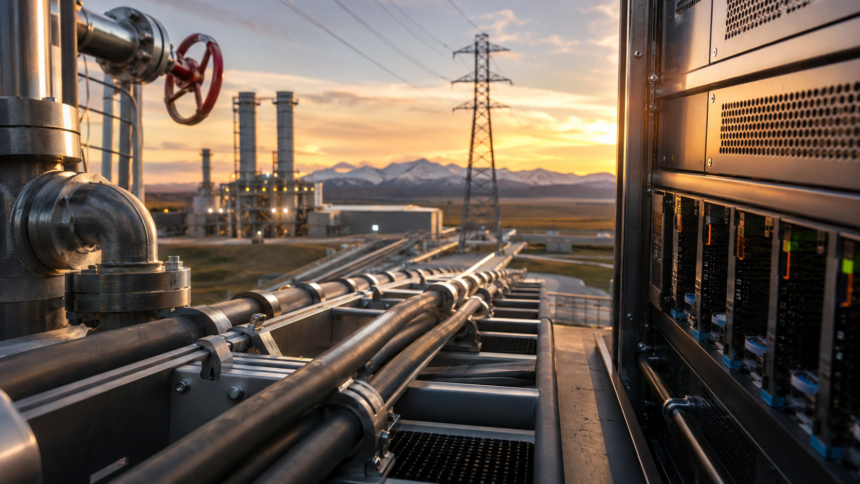
AI does not run in the abstract. It runs on electricity, hardware, cooling, fiber, and the operational discipline to keep all of it functioning reliably under load. Alberta has been doing exactly that at industrial scale for over a century, and that is a genuine structural advantage.
Energy is the foundation AI is built on
AI is energy hungry at scale. Training and running systems continuously requires the kind of reliable, affordable, large-volume power that Alberta’s energy sector has delivered for decades. The province’s natural gas generation, deregulated electricity market, and existing high-voltage transmission make it one of the most favorable jurisdictions on the continent for AI compute deployment. That is not a coincidence. It is a competitive position.
Oil and gas as the launchpad
The energy sector is not something Alberta is moving away from. It is the platform Alberta is building from. The operational discipline, the engineering rigour, the asset management, the safety culture, the project finance experience, all of it translates directly into how AI infrastructure gets built, secured, and scaled. The AI era extends Alberta’s energy identity into a new domain. Most regions cannot replicate that from scratch.
In Alberta, infrastructure is not a support function. It is a competitive discipline, and it is where structural advantage is built.
Build it with the same seriousness as physical assets
Not every workload belongs in the same environment. Training models needs different infrastructure than running inference at scale, and organizations that understand the difference avoid the two common failures: over-engineering simple use cases and under-resourcing the ones that matter. Every new AI integration also adds data flows and endpoints, so resilience and security have to be design requirements from the start, not retrofits.
Sustainability is credibility
AI facilities consume significant energy, and Alberta’s competitive position depends on disciplined emissions monitoring, efficient siting, and continued advances in energy technology. Sustainable infrastructure is a prerequisite for long-term credibility with global capital, enterprise clients, and the institutions shaping AI policy. It is part of the advantage, not a constraint on it.
Frequently asked questions
Why is Alberta good for AI data centres?
Alberta has reliable, affordable power from natural gas generation, a deregulated electricity market, existing high-voltage transmission, and an engineering workforce experienced in building and running large complex systems.
Is Alberta’s energy sector a liability for AI ambitions?
No. The operational discipline, engineering rigour, and project experience built in energy translate directly into building and scaling AI infrastructure. It is a launchpad, not a legacy.
Does sustainability conflict with AI infrastructure growth?
No. Disciplined emissions monitoring and efficient siting are prerequisites for long-term credibility with global capital and enterprise clients, which makes sustainability part of the competitive position.
This piece is part of the Alberta Tribune series on applied AI in Alberta. See also The Distributed AI Province: Compute for All of Alberta and AI Is Alberta’s Next Resource, and the Leduc Lesson Still Applies.
ZAK is the founder of AIwithZak.com and CEO of ORKA AI. He writes on provincial AI strategy and policy at AI Alberta, and works with leadership teams across Alberta and Western Canada on applied AI strategy and execution.
Should Alberta be positioning its energy advantage as the launchpad for AI compute on the continent?