


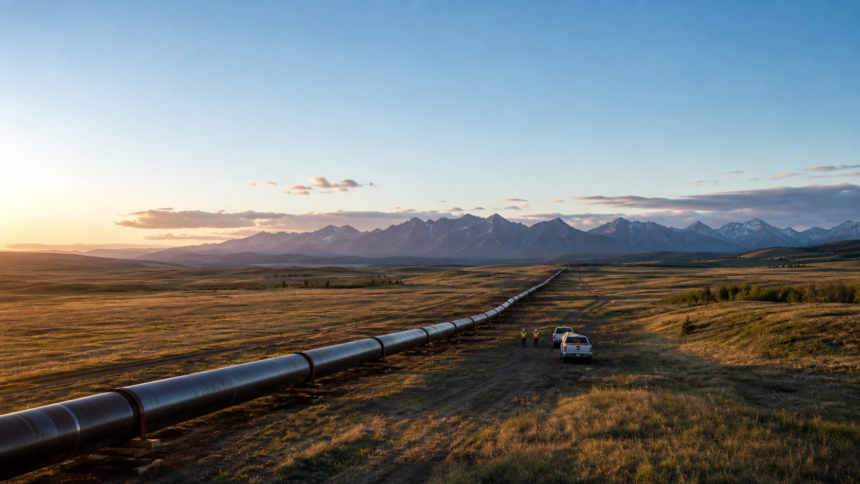
For years, the case against a new Alberta pipeline to the Pacific rested on a single claim. No serious money would ever back it. The majors had walked away, the capital had gone elsewhere, and anyone still talking about tidewater was chasing a political fantasy. That claim ran into trouble this week in Calgary.
A Buyer With a Balance Sheet
Speaking at the Global Energy Show, Energy Minister Brian Jean said the province has held direct talks with a Fortune 500 company about financing and building the entire line, a system sized to carry roughly one million barrels a day to the coast. Jean was careful with his words and called the discussion general. He also made clear it was not the only one. Several proponents have come forward wanting to invest, to participate, and to lock in offtake, the long term purchase contracts that turn a length of steel into a functioning business.
None of this is signed. Routes, partners, and prices remain open. But the tone has shifted from a year ago, when the province was still trying to convince Ottawa the project deserved to exist at all.
The Market Is Doing the Talking
The clearest sign of demand is coming from buyers. Rongsheng Petrochemical, already the largest purchaser of crude off Canada’s existing west coast line, is weighing a deal to take oil from the new project. That matters because the entire economic argument for building to the Pacific is access to Asian refiners who will pay for a barrel that does not have to pass through the United States first. Diversification stopped being a talking point the moment real customers started circling.
A pipeline with committed offtake is a pipeline that gets financed. A pipeline that runs on hope is not. The interest now surfacing suggests the commercial case is stronger than the skeptics allowed, and that the gap between Alberta supply and Asian demand is a business waiting to be built.
A Route, a Deadline, and British Columbia
Alberta plans to propose a general route by July 1 and submit the project to the federal Major Projects Office on the same timeline. Jean signalled a preference for a northwestern path to the coast rather than a southern route toward Vancouver, which keeps the line away from the most congested corridor and the busiest tanker traffic. Federal approval is the next gate, with construction possible as early as late 2027.
The obstacle has not changed. British Columbia continues to oppose new oil movement off its north coast and treats the federal tanker ban as settled policy. Money can close a financing gap. It cannot, on its own, clear a provincial veto.
Interest Is Not a Pipeline
Albertans have learned to read announcements carefully. The province has watched proposals collapse before reaching a final decision, and a memorandum is not a shovel. The job now is to convert a strong week of headlines into permits, contracts, and steel in the ground, the same test that earlier pipeline promises have struggled to pass.
Still, the direction is real. Private capital does not spend months in talks over a project it expects to die. When a Fortune 500 company offers to build the whole thing, the question stops being whether Alberta can attract investment. It becomes whether governments will let that investment proceed.
Should Alberta lock in a private builder now, or hold out for the best possible route and terms?