


Nation Building Once Meant Building
There was a time when Canada measured ambition in steel, pipe, and concrete. Projects rose from the ground not as cultural battlegrounds but as shared commitments to prosperity and security for the entire country. Alberta’s role in that story was not abstract. It was welded into place, kilometre by kilometre, along a corridor that would come to define a generation’s approach to nation building.
Today, the Trans Mountain pipeline is spoken about as a controversy. It did not begin that way. It began as a straightforward answer to a practical question. How does a young energy producer reach a distant coast and a wider world.
The original vision behind Trans Mountain
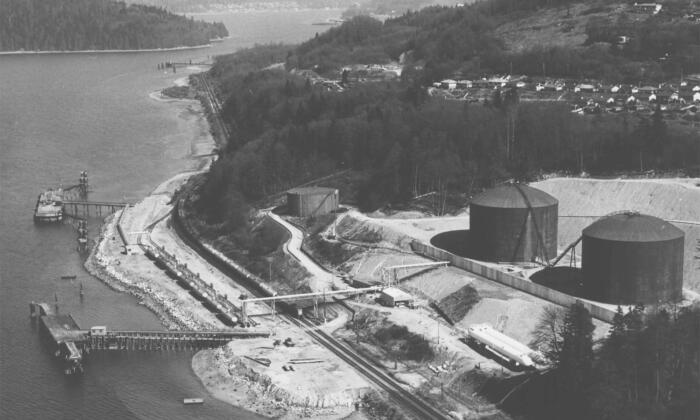
In the early years of Canada’s postwar growth, leaders in business and government understood that access to markets was not optional. It was the foundation of national strength. The Trans Mountain pipeline emerged from that mindset. It was conceived as a link between Alberta’s oil fields and the Pacific tidewater, a direct connection from Edmonton to the harbour at Burnaby.
The company received its federal charter in 1951, reflecting a broad recognition that this line was more than a private venture. It was part of a wider plan to secure supply, support industry, and save refineries on the coast from dependence on imported cargoes. Construction began the following year across a route that cut through foothills, mountain passes, and river valleys that few urban Canadians would ever see in person.
By 1953, oil was flowing through roughly 1,150 kilometres of pipe across western Canada. Compressor stations, valves, and pumping infrastructure dotted the landscape, and the line quietly did its work. It did not trend on social media. It did not dominate protest calendars. It simply connected a growing Alberta economy to a growing coastal market.
A feat of Canadian engineering
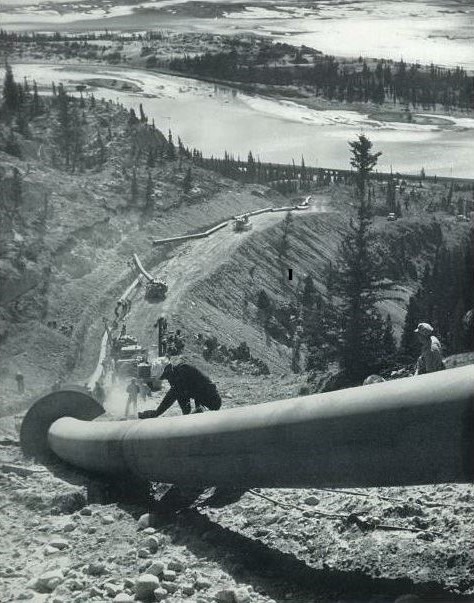
The physical build of Trans Mountain was a remarkable undertaking for its time. Crews laid pipe across challenging terrain where the Rockies rise between Alberta and British Columbia, threading a pathway that balanced geology, safety, and cost. They did so with equipment and methods that would seem basic by today’s standards yet delivered a durable system that has operated for more than seventy years.
From its starting point near Edmonton, the line ran south and west, crossing the Yellowhead region, climbing toward the passes, then descending toward the Fraser Valley and the Pacific terminus. Along the way, communities saw work camps, new roads, and the arrival of skilled trades whose livelihoods depended on precision and discipline. The project knit together engineering expertise from across the country.
Over time, upgrades and maintenance kept the system aligned with new safety standards and market demands. The core idea stayed the same. Move Canadian oil efficiently from the Prairies to the coast and do it with a level of reliability that shippers and refineries could trust.
A backbone of prosperity
For decades after its completion, Trans Mountain functioned as one of those national assets that mattered most when it was barely noticed. The line delivered crude and refined products that supported jobs in Alberta, British Columbia, and beyond. Tankers left the west coast loaded with Canadian energy, and coastal consumers benefited from a stable supply that did not rely entirely on foreign sources.
Capacity adjustments and operational improvements reflected the changing profile of western production. Yet underneath those technical decisions was a simple economic truth. Without a route to tidewater, Alberta’s bounty remained landlocked. With a reliable line to port, producers gained leverage and Canada gained influence.
That contribution did not always make headlines. It was felt instead in steady paycheques, municipal tax bases, and the confidence that comes from knowing that a key piece of infrastructure is doing its job.
From confidence in building to hesitation
The contrast between the original era of Trans Mountain and the present debate speaks volumes. In the 1950s, Canada was still building out core infrastructure with relatively broad agreement on its importance, even when details were contested. The discussion centred on routes, budgets, and technical risk, not on whether the country should build at all.
Today, infrastructure often becomes a shorthand for wider cultural arguments. Pipelines are asked to carry every anxiety about the economy, the environment, and identity at the same time. Trans Mountain’s expansion has faced intense scrutiny, protests, court challenges, and political manoeuvring that would have been almost unimaginable to the original builders.
A project once treated as a backbone of supply is now presented by some as a symbol of division. That shift tells us as much about our politics as it does about our infrastructure. Canada has moved from a culture of problem solving to a culture of permanent contention.
Ownership and the modern chapter
When a private owner considered walking away from the expansion in 2018, the federal government stepped in and purchased the pipeline system, arguing that it was a strategic national investment. That decision sparked debate about public risk, cost overruns, and the proper role of government, yet it also underscored an important point. Even critics recognized that the underlying asset carried national significance.
The expansion itself has been marked by delays, regulatory hurdles, and sharply rising costs, but its planned increase in capacity reflects the same logic that drove the original build. Canada needs reliable corridors to move energy to market, and Alberta remains central to that effort.
The modern chapter has unfolded under a very different political sky. Yet the reasons for caring about the line remain grounded in energy security, jobs, and the ability of a trading nation to reach global buyers on its own terms.
What the Trans Mountain story says about Canada
The story of Trans Mountain is, at its core, a story about what kind of country Canada chose to be in the middle of the twentieth century. A country willing to take on serious projects, accept the tradeoffs, and see the value in connecting regions through shared infrastructure. Alberta was not a side note in that story. It was a driving force, supplying the resource that made the investment worthwhile.
For center right Albertans, the heritage of this pipeline is about more than barrels and capacity charts. It is about a mindset that treated energy as a strategic asset, not something to be apologized for. It is about a belief that responsible development can coexist with care for land and communities, managed through standards and innovation rather than paralysis.
Remembering that history does not erase modern concerns.
It does, however, challenge a politics that assumes that building is suspect by default. The Trans Mountain line stands as a reminder that Canada once had the confidence to act, to connect, and to grow, and that Alberta expects its leaders to recover at least some of that resolve.