

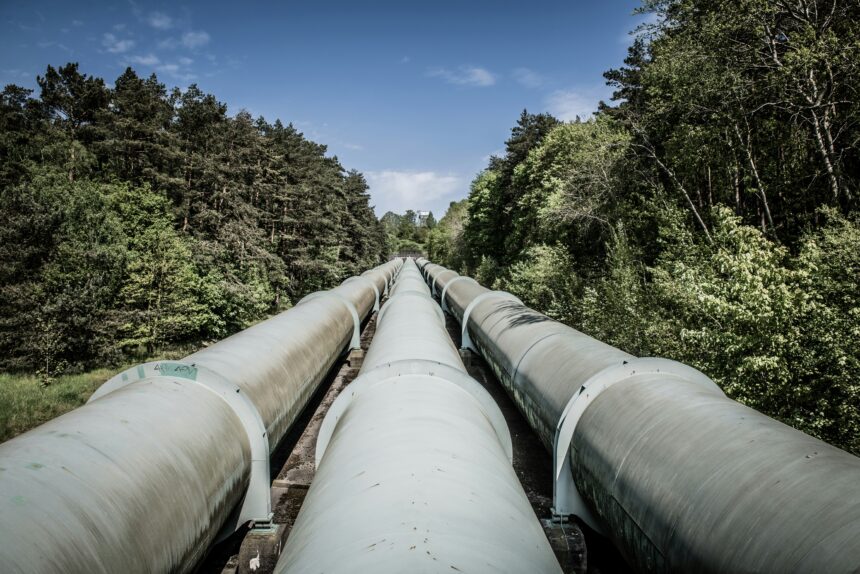
Alberta’s only pipeline to the Pacific is asking Canada’s energy regulator for permission to shut out shippers who can’t sign a long-term contract.
Trans Mountain has applied to reserve 90% of its capacity for shippers holding long-term contracts, up from 80% today, and it wants an answer by October 1. The company says the line has been running at or near full capacity for months, and in June, for the first time since the expansion opened, more oil was offered to the pipeline than it could actually carry.
What the number actually does
If the regulator says yes, the space set aside for shippers without a long-term contract drops by roughly half, from about 178,000 barrels a day to 89,000. That space is where smaller and mid-sized Alberta producers move their oil when they don’t have the balance sheet for a decade-long commitment. Canadian Natural Resources already holds 256,500 barrels a day under contract on its own. Smaller producers typically need an investment-grade credit rating or a hefty letter of credit just to qualify for a long-term deal in the first place, so most sell through third-party marketers instead and settle for discounted Edmonton or Hardisty prices while contract holders collect world prices at the coast.
A good problem turning into the wrong story
Demand for Canadian crude has climbed since a shipping disruption in the Strait of Hormuz pushed Asian buyers toward this side of the Pacific. The Business Council of Alberta puts the value of that better market access at roughly $5 billion in extra provincial revenue this year alone. A pipeline running short of space because too many buyers want the oil is the kind of problem Alberta spent a decade wishing it had. It should not turn into a story about which companies are big enough to benefit from it and which ones get pushed back to a landlocked discount.
Who actually built the case for this line
The toll file now sitting with the regulator settles the other half of that question. The same pattern shows up wherever Ottawa negotiates the terms on Alberta barrels. Alberta taxpayers backed Trans Mountain through a federal buyout, years of construction delays and a final price tag that ballooned past the original estimate, on the argument that tidewater access would help the whole industry, not just producers who could afford a long-term contract on day one. A capacity rule that quietly pushes that access toward a handful of large players undercuts the reason the public stuck with the project through all of that. The companies asking for 90% are not wrong that certainty helps them plan. They are asking the regulator to decide who that certainty is for.
What the regulator should weigh before October 1
A ruling favouring long-term contract holders makes the line easier to finance and simpler to operate. A ruling that protects open access keeps the door open for mid-sized Alberta producers who do not have Canadian Natural Resources’ balance sheet but still built the industry this pipeline was designed to serve. Both arguments carry real weight, which is exactly why this filing deserves more scrutiny than a routine capacity request usually gets.
Should smaller Alberta producers keep guaranteed access to pipeline space, or should Trans Mountain be free to reserve it for whoever signs the longest contract?