

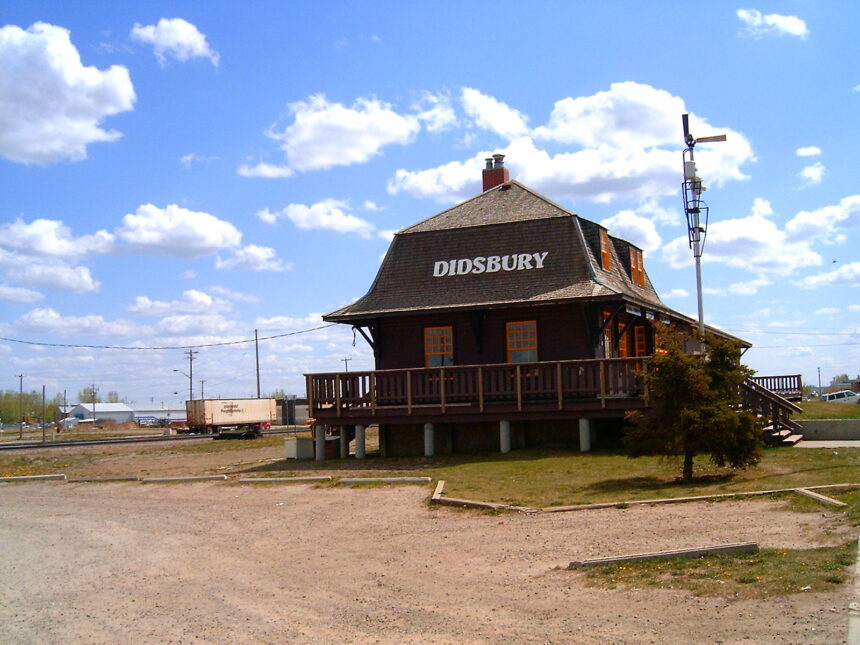
Didsbury got a sound stage for Canada Day.
West of 22 Productions opened its doors on July 1 in a town of a few thousand people an hour north of Calgary, with a 20 foot green screen and a working stage. It is described as the only facility of its kind in Alberta outside Calgary and Edmonton, which is either a small piece of trivia or the most interesting sentence in Alberta’s screen sector this summer, depending on how closely you have been watching where the money actually goes.
What opened, and what was not said
Start with the honest part. The square footage was not disclosed. Neither was the capital cost, and neither was a job number. Anyone quoting figures on this building is making them up.
What was disclosed is the specification and the reasoning, and both are more useful than a ribbon cutting release usually is. A 20 foot green screen is not a soundstage for a studio feature. It is a working box for commercials, corporate work, series inserts, independent productions and the kind of second unit day that otherwise sends a crew back to the city. That is the volume end of the business, and volume is what keeps people employed between the big productions.
Jon Allan is a co-founder and also the economic development officer for the Mountain View Regional Film Office. Wearing both hats at once is exactly what a town this size has to do, and it is worth naming rather than glossing over.
The 30% that explains the location
The building exists because of a number.
Alberta’s Film and Television Tax Credit pays at two rates, 22% or 30%, and the higher rate is the one productions shooting outside the major centres are chasing. The pitch for the Didsbury stage is that a production can hold that higher rate instead of surrendering it the moment it needs an interior and drives back to a Calgary facility to get one.
That is a genuinely practical problem and it is the sort of thing that never appears in a funding announcement. A show can shoot three weeks of exteriors in Mountain View County and put the rural case for its budget at risk over four interior days. Put a stage inside the county and the arithmetic holds.
The provincial numbers released in June make the same point from the other direction. More than 60% of Alberta productions film outside Calgary and Edmonton, and the tax credit was opened to unscripted television in the same month. Unscripted is precisely the category that shoots in small towns on modest budgets and needs a covered space nearby.
Three municipalities behaving like one film office
The Mountain View Regional Film Office is a partnership of the Town of Didsbury, the Town of Sundre and Mountain View County.
That is the part municipal watchers should sit up for. Three separate councils, three separate budgets and three separate sets of ratepayers agreed to run one film office rather than three competing ones, in a province where neighbouring municipalities have been known to spend years and real money fighting each other over the same warehouse.
A location scout does not care about municipal boundaries. A scout wants one phone number, one person who can say whether a road can be closed, and one office that knows which landowner to call. Three towns that understood this and acted on it have done something more valuable for their region than any single grant would have delivered, and they did it without a provincial program telling them to. Alberta already has a prairie hamlet that turned itself into a film set and built an identity out of it. That was not luck either.
The test
A stage is not an industry. Whether this works comes down to bookings, and bookings will not be public.
The measure worth watching over the next two years is whether a production books Didsbury more than once. First bookings are curiosity and a favour to a local partner. Repeat bookings mean the space is genuinely competitive against driving back to the city, and repeat bookings are what turn a green screen into a reason for a grip or a gaffer to keep living in Mountain View County instead of moving to Calgary at 28.
Rural Alberta has been the backdrop for other people’s productions for fifty years. Owning a piece of the infrastructure rather than just the scenery is a different proposition, and it started with one green screen and a Canada Day opening.
Should more Alberta counties be running shared film offices, or does this only work when a few determined people make it work?