

Bombardier shut down its Canadair amphibious water bomber line in 2015. Not enough orders were coming in to keep it running, so the plant went dark and stayed that way for nearly a decade. De Havilland Canada restarted production in Calgary in 2024, building a new version called the Canadair 515, and the gap in between those two dates turned out to matter a lot more than a simple pause in manufacturing usually would.
What Nine Dark Years Actually Cost
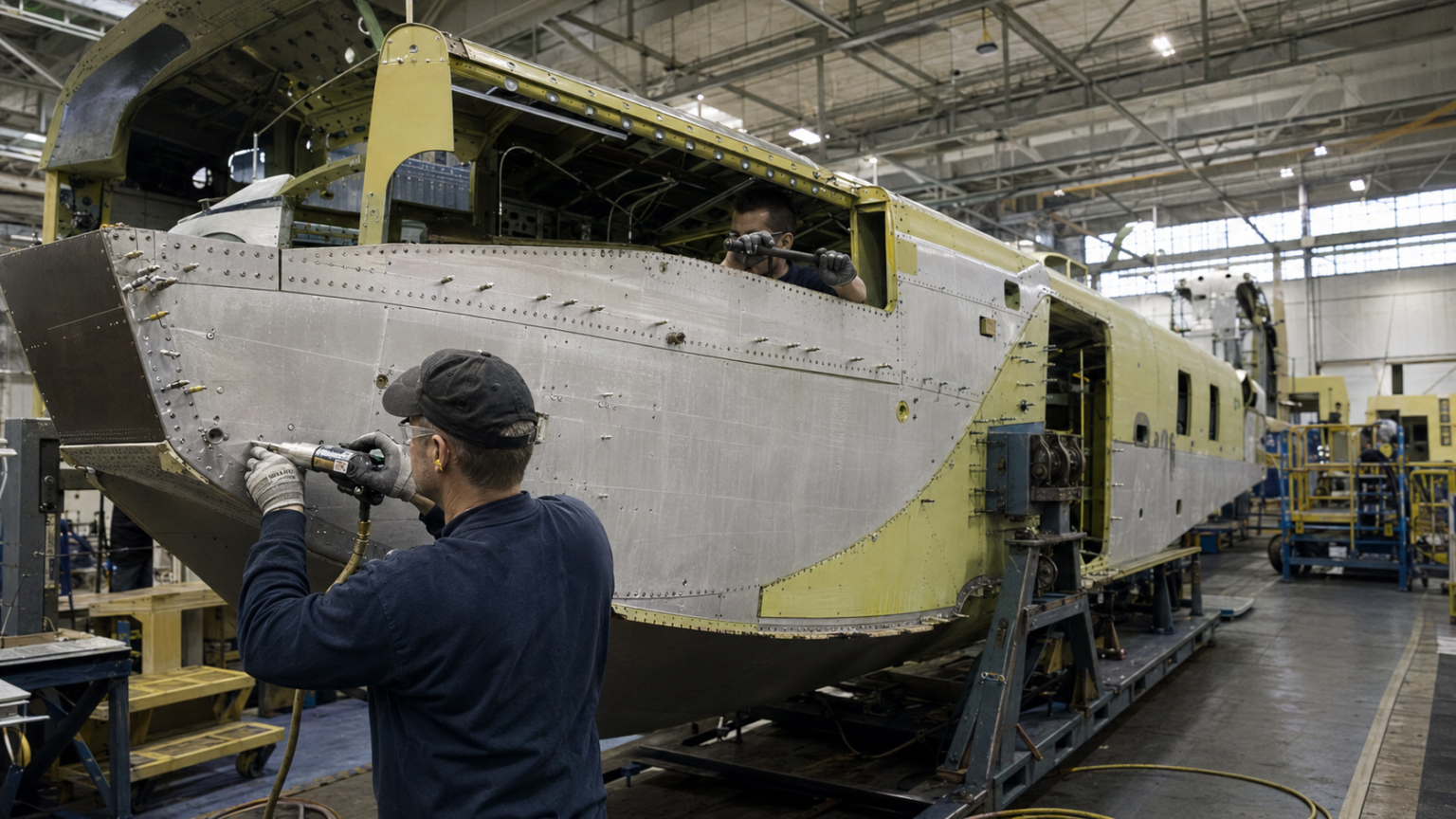
Shutting down an aircraft production line is fast. Restarting one is not, and the water bomber line is a clean example of why. When Bombardier closed the doors in 2015, the network of specialty suppliers that fed parts into the line scattered off to other contracts, because a supplier that makes aircraft components for a living can’t afford to sit around waiting for a customer that might never come back. Skilled machinists and assemblers who knew how to build these specific aircraft left the industry too, taking a decade of muscle memory with them. The result is visible on the shop floor today. Fuselages on the Calgary line are still drilled and riveted largely by hand, the kind of labour-intensive process a mature production line would normally have automated years ago, because the tooling and expertise needed to automate it walked out the door in 2015 and hasn’t fully come back.
Europe Got in Line First
European governments have ordered 22 of the new Canadair 515s since 2022, and they’re not getting them quickly. The first European deliveries arrive in 2028. France, which ordered four aircraft, waits until 2032 for the second half of that order to land. Those are not typos. A four-year gap between placing an order and getting the plane is what a nine-year production shutdown does to a supply chain, even three years into the restart.
Why This Summer Made the Wait Feel Different
France experienced what its president called the country’s worst wildfire crisis since the Second World War this summer, and France owns 12 water bombers in total. At the height of the crisis, only seven of those twelve were actually flying. That’s not a shortage anyone can fix with better logistics or a faster maintenance schedule once the fires are already burning. It’s a fleet that was too small before the summer started, waiting on new aircraft that won’t fully arrive until 2032.
Canada Joined the Queue Late
Europe placed its first orders for the new aircraft in 2022. Canadian governments, for the most part, didn’t start joining that same order queue until after the 2023 wildfire season, one of the worst on record here, forced the question. De Havilland Canada has said publicly it would build a second production plant if Canadian governments collectively committed to ordering 50 aircraft, a number large enough to justify the investment. That commitment hasn’t materialized yet. One aviation academic, commenting this week on the pace of the whole rebuild, summed up the dynamic bluntly: “that’s the Canadian way, right?”
The aircraft itself is designed and built right here in Alberta, in a Calgary plant employing people who know how to rivet a fuselage by hand because the automated version of that job hasn’t been rebuilt yet. What’s missing isn’t capability. It’s a domestic order book large enough to justify a second production line, the kind of order book that only shows up when governments commit years before the wildfire season that makes the need obvious, not during it.
Will Canadian governments commit to the order volume needed to expand the Calgary line before the next bad wildfire season, or after it?