

In the spring of 1976, lawmakers in Juneau and lawmakers in Edmonton were doing something close to the same thing without much coordination between them. Both had just figured out that oil money arrives in waves, not a steady tide, and both decided some of it needed to be set aside before it got spent on whatever felt urgent that year. Alaska wrote its answer into the state constitution. Alberta wrote its answer into an ordinary statute, the kind a future legislature can amend on a quiet afternoon, which is more or less what happened.
Fifty years on, the difference in outcome is not subtle. Alaska’s Permanent Fund now holds more than $80 billion. Alberta’s Heritage Savings Trust Fund stood at $31.9 billion at the end of last December. Alberta has pulled many times more oil and gas out of the ground than Alaska over that half-century, by any reasonable measure of total volume. The gap between those two numbers has nothing to do with which province got luckier with geology.
The Rule That Made the Difference
Alaska put a hard number into its constitution. At least 25% of mineral lease rentals, royalties, and bonuses the state collects has to go into the Permanent Fund, full stop, with no annual vote required. A legislator in Juneau who wants to skip a deposit in a tight year cannot simply talk the chamber around it. The deposit happens whether anyone in the capitol is happy about the number or not.
Alberta never built itself that kind of discipline. The original 1976 Heritage Fund legislation called for a share of resource revenue to flow into the fund automatically, but by 1987, with oil prices collapsed and the provincial budget under real strain, Alberta suspended its own deposit rule. That decision did not belong to one party or one premier. It hardened into a pattern that persisted across multiple governments of different political stripes for the better part of four decades, through boom years when the money was sitting right there for the taking and lean years when it clearly was not. Contributions became optional, and optional things get skipped.
What the Alaska Model Actually Pays Out
Alaskans get a reminder every year of what constitutional discipline builds. This year the dividend lands at $1,200 per resident, a $1,000 base payment plus a $200 top-up tied to energy prices, with cheques hitting mailboxes and bank accounts starting in October. Two separate things get mashed together in most conversations about this. Paying out a direct dividend the way Alaska does is one policy choice, open to real debate either way. Keeping a promise to save consistently is a different matter entirely, and on that one, the record from 1987 onward speaks for itself.
Alberta Is Trying Again, Which Is the Part Worth Watching
Give credit where it belongs. Alberta is not just looking back at 1987 with regret and doing nothing about it. A new corporation now manages the Heritage Fund with a mandate to grow it, $2.8 billion was deposited for the 2025-26 fiscal year, and the stated target on the table is $250 billion by 2050. That is not a modest ambition. It would put the fund in a different league altogether, closer to what Alberta’s resource base probably should have built if the deposits had never stopped in the first place.
The catch is the same one that sank the original plan. A $250 billion target only survives contact with the next downturn if deposits keep landing when the budget is tight, not only when oil prices cooperate and the treasury has room to spare. That was the exact moment Alberta walked away from its own rules the first time, in 1987, when a rough patch made the deposit feel optional. Nothing about provincial politics has changed enough since then to assume it won’t happen again on its own. What would change the outcome is a rule sturdy enough to survive a finance minister who would rather spend the money on something popular this year.
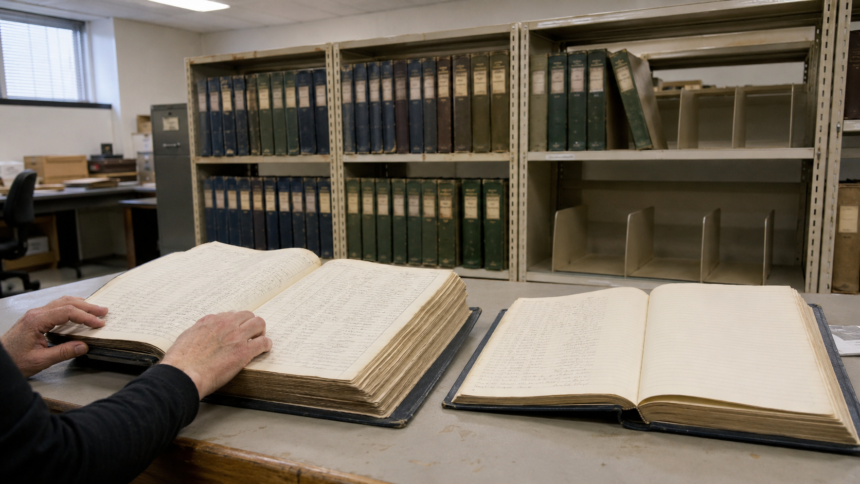
A ledger sitting in a records office in Juneau shows fifty straight years of deposits made without exception, through booms and busts alike, each entry a plain line of numbers nobody had to fight for. Alberta now has a real chance to build the same kind of record. Whether it does will come down to what happens the first time a finance minister looks at a lean budget year and wonders if this is the year to skip one.
Will Alberta’s rebuilt savings discipline hold the next time oil prices turn, or will it get shelved again the way the original rule was in 1987?