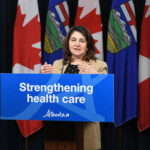



Alberta’s auto insurance system changes on January 1, 2027. The province’s Care-First model will replace the current tort-based system, paying treatment and income benefits from a driver’s own insurer regardless of who caused the collision. The promise attached to this change is specific: a report commissioned by the government from consulting firm Oliver Wyman projects average savings of $366 per vehicle per year for drivers carrying basic coverage.
Alberta drivers have heard affordability promises before. The question worth asking now, while there is still time to evaluate the model honestly, is whether the $366 figure reflects the full picture.
How the Numbers Are Supposed to Work
The savings projection rests on a straightforward premise. The current system’s bodily injury claims are expensive because they frequently end in litigation. Lawyers, court time, and the unpredictability of jury awards all get priced into premiums. A system that routes injured drivers into a benefits schedule and away from the courts should, in theory, reduce those costs and pass the reduction on as lower premiums.
The government has also introduced an interim rate cap ahead of the January 2027 transition. Under the cap, insurers cannot raise average rates by more than 5%, and individual renewals cannot increase by more than 10%. That provides some near-term protection while the new system is built. The province has committed to further adjustments if the expected savings do not materialise once Care-First is running. Whether that commitment has teeth depends entirely on the political will of whoever is in government when 2028 rolls around.
The Trade-Off That Is Not in the Headline
Care-First is not, technically, a pure no-fault system. Drivers can still sue an at-fault party under specific conditions: if the at-fault driver was convicted of a Criminal Code or Traffic Safety Act offence, or if out-of-pocket losses exceed the benefit schedule maximums. The government has been careful to emphasise this distinction.
Critics, including the Canadian Bar Association Alberta branch, are less reassured. The CBA Alberta argues the practical effect is a substantial reduction in the right to sue for pain and suffering, a right Albertans have held under the previous system. An injured driver who suffers serious but not catastrophic harm, someone who cannot work for months and faces real emotional consequences from a collision, may receive treatment benefits but forgo compensation for the broader impact on their life unless the narrow litigation threshold is met.
A separate report found that if the limited right to sue is interpreted too narrowly in practice, the savings could reverse. One analysis suggested the model as drafted could cost drivers up to $136 annually rather than saving $366, depending on how claims are administered. That is a wide range of outcomes from the same legislative design. Albertans already carrying a heavy cost-of-living burden are entitled to a straight answer about which scenario is more likely.
What Drivers Should Watch
The Oliver Wyman projection is a reasonable best-case estimate under favourable assumptions. Insurance actuarial models are built on historical data and predicted behaviour changes. When the behaviour in question is whether injured Albertans pursue litigation, the model depends heavily on whether the benefit schedule is generous enough that most people have no reason to sue. If benefits fall short, if the schedule is too low for serious injuries, or if the administrative process is slow and contested, litigation pressure returns and the premium savings evaporate.
The government’s safeguard, a promise to revisit the rate cap if savings do not arrive, is worth holding them to publicly. The real cost of broken affordability promises compounds over time, and Alberta drivers have long memories. The transition to Care-First could genuinely reduce what families pay to insure their vehicles each year. The 2027 launch date gives insurers, regulators, and drivers a clear marker against which to measure the result.
A Fair Test, Applied Fairly
The Care-First model is not obviously wrong in its design. Faster access to medical care after a collision, less money burned on litigation overhead, and lower average premiums are all worth having. The scepticism is warranted not because the goal is misguided but because the mechanism relies on projections that have not been tested against real Alberta claims data under the new rules. January 1, 2027 is the start of the experiment, not the proof of the concept.
Drivers should renew their policies with clear eyes. The rate cap provides near-term protection. The savings projection is plausible but conditional. And the limitation on pain-and-suffering lawsuits is a real reduction in a right that existed before, whatever language the government uses to soften that fact.
If Alberta’s Care-First model fails to deliver the projected $366 savings by 2028, what accountability mechanism should exist for drivers who paid in expecting lower premiums?