


The trades are not leaving Alberta. Read that part carefully, because almost every summary of this week’s numbers is going to get it backwards.
BuildForce Canada published its Alberta outlook earlier this week, running to 2035. Residential construction employment in this province falls 16% between 2025 and 2035. Non-residential construction employment rises 15% over the same stretch. Industrial, commercial and institutional building rises 31%. Engineering rises 10%.
Same province. Same decade. Same finite pool of people who know how to run a crew.
Irwin Bess, Executive Director at BuildForce Canada, described the provincial outlook as “driven by strong levels of non-res construction growth.” He is describing a boom, and without quite saying so, describing where every experienced framer in Alberta will be getting a phone call from.
Residential falls 16% while industrial climbs 31%
A 31% increase in industrial, commercial and institutional work is a genuinely good problem for an economy to have. Plants, warehouses, hospitals, schools, power infrastructure. Long contracts, big crews, steady money, work that does not stop because a mortgage rate moved a quarter point.
Housing cannot compete with any of that on stability. A residential builder prices a house against what a young family can carry. An industrial contractor prices a plant against a corporate capital budget. Put both employers in the same hiring hall on a Monday morning and there is no mystery about who wins the journeyman.
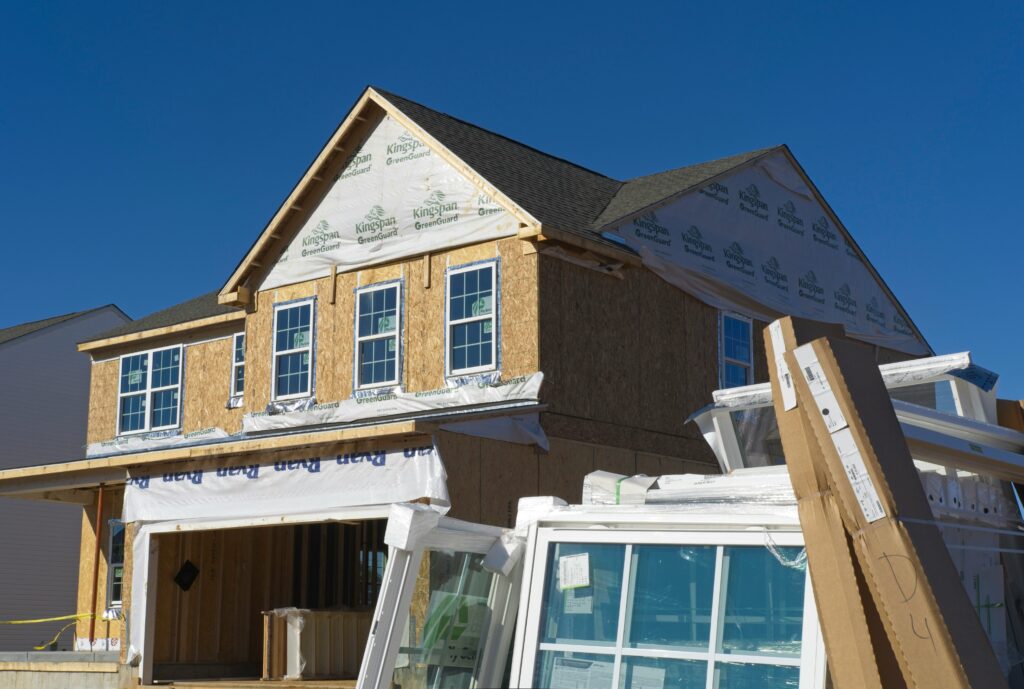
British Columbia is looking at a 13% drop in residential construction jobs by 2035, so Alberta’s decline is steeper by three points. Before anyone reads that as Alberta falling behind, consider the likelier explanation, which is that this province has far more industrial work pulling in the opposite direction. That reading is this column’s argument. The forecast does not make it.
One in five workers ages out
Underneath the reallocation sits the harder number.
Alberta needs 48,800 workers by 2035. Retirements over that period come to 43,700, which is 21% of the province’s 2025 construction workforce. Expected new entrants come to 43,500. Do the subtraction and the province lands 5,300 workers short.
Five thousand three hundred sounds survivable, and on paper it is. The trouble is that a shortfall does not distribute itself evenly. It lands hardest on whoever pays least and offers the least certainty, and in this province that is the residential side.
Note also that retirements outrun new entrants. Alberta brings in 43,500 people to replace 43,700 who are leaving, and every departure walks out with twenty or thirty years of judgment a first year apprentice will need a decade to approximate.
The bidding war is happening inside Alberta
Municipal councils across this province spend enormous time on housing supply. Zoning maps. Density targets. Approval timelines. Development levies argued line by line at eleven at night.
All of it matters. None of it produces a single additional electrician.
A council can approve ten thousand units and still watch six thousand sit unbuilt because the crews signed on to a project on the industrial side of the highway. That is the constraint nobody has a bylaw for. Costs already climbed through a surcharge before the first shovel on the fee side. Labour is the second squeeze and it lasts longer, because a fee can be cut in an afternoon and a journeyman takes four years.
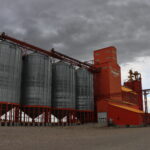
Alberta’s trades are being bid away by the project down the highway. Same province, same labour pool, and the sort of build going up at Olds can comfortably pay the premium. Vancouver and Toronto have almost nothing to do with it.
Where the counterweight comes from
Now the part worth being genuinely encouraged about.
New apprenticeship registrations in Alberta topped 18,000 in 2024. That is a record high. Not a modest improvement, not a recovery to some earlier level, a record. Eighteen thousand people who decided a trade was the better bet, in a decade when most public messaging pointed young people almost anywhere else.
Those registrations are the single most important housing number in this province, and almost nobody outside the industry has seen it.
There is a second pool sitting in plain view. There are 35,970 women employed in Alberta construction. In an industry facing 43,700 retirements and a hiring requirement of 48,800, that pool is the largest untapped supply anyone has identified, and it has moved slowly for as long as it has been measured.
Grow that pool and the 5,300 shortfall closes on its own. The Canadian Home Builders’ Association has been making a version of this argument nationally for years, with limited traction outside the trade press.
Alberta will build an enormous amount of infrastructure between now and 2035, and that deserves to be treated as the good news it is. The bill arrives on the housing side, one crew at a time, whether or not anyone plans for it.
The 18,000 registrations say the pipeline is filling. The 16% decline says it is filling toward the wrong end of the industry.
Should Alberta be building a residential specific trades pipeline, or letting the industrial side take whoever it can pay for?
Related from Alberta Tribune: Canada Loses 135,000 Residential Builders To Retirement By 2035