

Alberta spent years building flood protection infrastructure before anyone knew whether it would work. This spring and summer finally answered that question.
What The Program Actually Paid For
The province launched its Drought and Flood Protection Program in 2024, budgeting $125 million, roughly $25 million a year through 2028-29, to fund design and construction on projects meant to protect critical infrastructure and keep communities safer during extreme weather. Programs like this are easy to question when the money goes out and nothing has happened yet. This year, several of the funded projects were actually tested.
Four Projects, One Severe Season
The Springbank Off-stream Reservoir west of Calgary was used for the first time this year, diverting high flows off the Elbow River during a period of heavy rain. Updated flood maps now show meaningfully reduced flood risk along the Elbow as a result of that project working as designed, not just modelled.
Ghost Reservoir was used multiple times through the season to hold back Bow River flows before they reached Calgary, lowering flood risk for the city and for communities downstream. That is not a one-time test. That is a piece of infrastructure doing its job repeatedly in a single wet season.
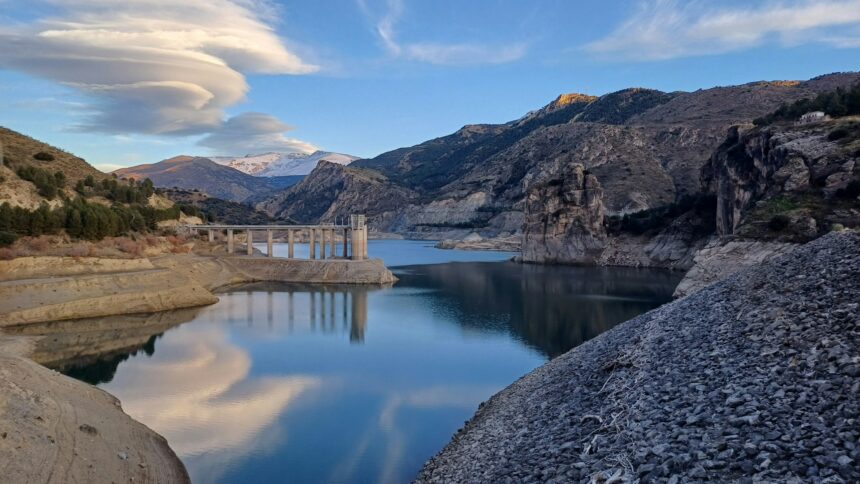
In Canmore, the Cougar Creek debris flood retention structure, built with roughly $46 million in provincial funding, captured excess water and debris during high flows, cutting the force of runoff before it reached the town. Canmore’s steep-creek flooding risk is well documented. A structure built specifically to blunt it just did exactly that.
In Fort McMurray, a $661,000 investment in updated flood mapping, including ice-jam mapping specific to the Athabasca and Clearwater rivers, informed the emergency response to a difficult spring breakup this year, helping limit damage to parks, parking areas and riverside trails.
Prevention Spending Is Easiest To Question Before The Storm
Grant Hunter, Alberta’s Minister of Environment and Protected Areas, put it plainly: “Alberta has faced a challenging spring and summer of severe weather, and our investments in flood resilience are delivering results.” That is a defensible claim this year, because there is a season of actual outcomes behind it rather than a projection.
Prevention spending is always the easiest line item to cut, because the payoff is invisible until the year it is not. A reservoir that never floods draws no attention. A debris structure that never catches debris looks like money that did nothing. This year, several of these projects stopped being theoretical and started being infrastructure that visibly did its job under real conditions, in the same season, across four different communities.
That is the standard this kind of spending should be held to going forward: not whether it sounds good in a budget announcement, but whether it holds up the next time the weather gets serious.
Should every major flood project get a public scorecard after severe weather, showing exactly what worked, what failed, and what damage it actually prevented?