


The story ran for a couple of weeks. Panels, columns, statements from people who had to say something. Then it slid off the front page the way these things do, replaced by something louder.
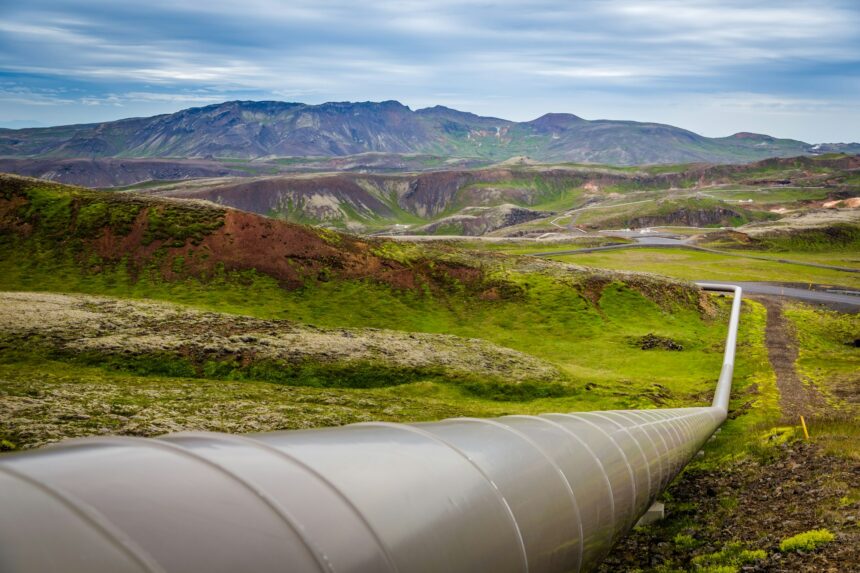
Canada’s proposed new West Coast pipeline is no longer news. The economics behind it did not read the coverage.
One customer is not a market
Start with the position this province is actually in. The overwhelming majority of the crude Alberta exports goes to a single country. The United States is a good customer, a close one, and a reliable one most of the time. It is also the only one at scale, and that is a structural exposure regardless of how warm the relationship looks on any given Tuesday.
Anybody who has run a business with one dominant account knows the feeling in their stomach. The account pays on time for years. Then it wants a better price, and you have no answer, because the alternative is a warehouse full of product and a bank that still expects its payment on the first of the month.
That is what single-customer dependence does to pricing power. It does not matter how good the product is or how well the operation runs. If there is one place the barrel can physically go, the buyer sets the terms and the seller finds out what they are.
The clock starts long before the dirt moves
The part that gets almost no coverage is also the part that matters most right now.
Major linear infrastructure takes years to build. Everybody knows that much. What gets less attention is that the years before construction are longer, and more decisive, than construction itself.
Before a single joint of pipe goes into a ditch there are engineering studies, route selection, regulatory filings, capital allocation decisions inside companies, shipper commitments and financing structures. Those steps run in sequence and they run slowly. They are also where projects live or die. Nobody cancels a pipeline halfway through the trench. They cancel it in a boardroom four years earlier, when the numbers fail to clear the hurdle rate and the file gets closed without a press release.
Which means the decisions that determine if this thing exists in the next decade are being made now. Not announced now. Made now, out of the headlines, in capital committee meetings and term sheets and regulatory correspondence that generates no coverage at all.
Capital does not wait for a news cycle
Investment committees are not sentimental and they are not patriotic. They allocate against risk-adjusted return over horizons measured in decades, because a pipeline only pays if it moves volume for thirty or forty years. That is one of the longest-dated bets anybody makes in this business.
What a board is really pricing is confidence. Confidence that a regulatory process started today will actually finish. Confidence that the rules in year eight will resemble the rules in year one. Confidence that Ottawa will not rewrite the terms after the capital is committed and the concrete is poured.
Canada has a record on this, and the record is the problem. Projects have been approved and then stranded. Frameworks have shifted mid-application. Money that came here once and got burned carries an institutional memory, and it charges for that memory in the form of a higher required return. Every additional point of risk premium raises the bar the project has to clear, and some projects that would work under a stable framework simply never clear it.
None of that shows up in a news cycle. It shows up as an absence. A filing that never gets made. A commitment that never gets signed. There is no press conference for a decision not to proceed.
What the underreported stretch decides
There is a tendency to treat infrastructure as a thing that either gets announced or does not. The announcement is the least interesting moment in the sequence. By the time a project is announced, the hard decisions are already behind it. By the time one is cancelled, the decision was usually made months earlier by people who had stopped returning calls.
So the period Alberta is in right now, the underreported stretch after the headlines and before anything visible happens, is the period that decides the outcome. Every signal sent during it gets priced. Regulatory clarity gets priced. Timelines that hold get priced. Political statements suggesting the rules might move get priced too, and they get priced against the project.
The physical case has not changed since the story was on the front page. Alberta produces more than one route can carry to one buyer, and the gap between what comes out of the ground and what can reach tidewater is a permanent tax on every producer in the province. A second coast means a second set of bidders. A second set of bidders is worth more per barrel than any amount of goodwill from the first one.
The pipe is not in the ground. Nothing has been decided in public. That is exactly what makes this the moment that counts, and exactly why the absence of coverage is worth paying attention to.
What should Albertans expect from Ottawa while these decisions get made away from the cameras?