

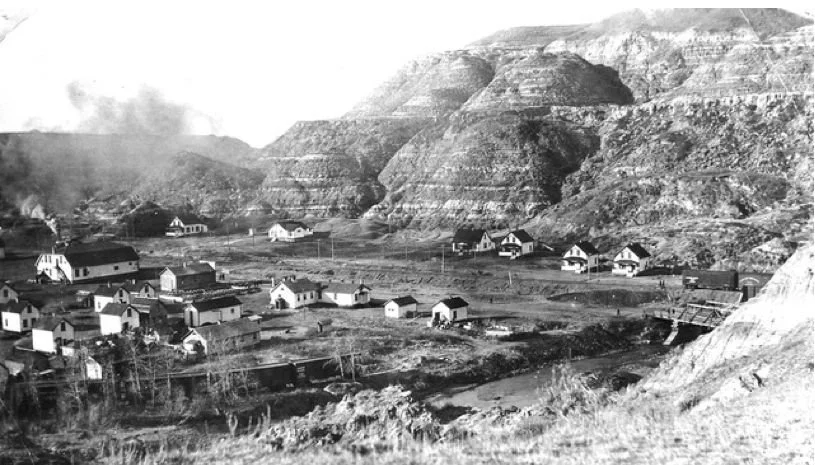
You do not stumble into Wayne. The road in from Rosedale crosses the Rosebud River eleven separate times in about six kilometres, one lane at a crossing, and by the fourth or fifth you stop counting and start wondering what was down here that justified all this. The answer is coal, and it has been gone a long time.
A Coal Town at the Bottom of a Coulee
The Rose Deer Mine put this town on the map. Estimates of how many people crowded into the valley at its peak run from a few hundred to a few thousand, which is normal for coal camps that filled and emptied faster than anyone could count them. What nobody disputes is the ending. The coal economy came apart in the 1930s and took the town with it. Travel Drumheller now lists the population at roughly 28.
The Rosedeer Hotel, built in 1913, is still open. So is the Last Chance Saloon attached to it, still selling beer to people who drove all eleven bridges to get there. A building that has stayed in business for over a century in a town that lost its entire reason for existing is not a minor accomplishment.
Alberta Is Full of Places Like This
Whole communities across this province were built around a railway siding, a mine shaft, a grain elevator or a single industry that eventually walked away. Most of them vanished completely. A handful, like Wayne, held on with a few dozen residents and one building that refused to close, the same pressure now emptying main street storefronts across the province.
That pattern is the actual shape of Alberta’s rural history, and it does not fit neatly into the version of the province people imagine from outside it. Before the oil, before Leduc, there was coal, and the coal built towns in valleys that nobody would choose to settle for any other reason. Cadomin took its name from the mining company that created it. The Drumheller badlands are dotted with the remains of them.
The Bridges Are the Monument
Nobody built 11 one-lane bridges across six kilometres of river for a tourist attraction. They built them because the Rosebud River meanders hard through that coulee and a coal town at the bottom of it needed a way out for the coal and a way in for everything else. The infrastructure outlasted the industry that justified it, which is a fairly reliable rule in this province.
Drive it once and the number stops being trivia. Eleven crossings is a lot of engineering for 28 people, and every one of them is a reminder that this valley used to be worth that much trouble.
Had you ever heard of Wayne and its 11 bridges before now?